Understanding Office Security Systems (2026): Key Components


Last updated: 7 September 2026
Quick Answer
An office security system is an integrated set of technologies — typically CCTV, access control, alarm systems, and monitoring services — that protects a workplace's people, premises, and data. The most effective setups combine physical measures with 24/7 monitoring and verifiable evidence: Priority First, for example, logs every patrol and checkpoint with a photo, GPS location and timestamp rather than assuming it happened.
Key Takeaways
- A complete office security system rests on four core components: surveillance cameras, alarm systems, access control mechanisms, and environmental sensors.
- The Private Security Industry Act 2001 requires manned guarding personnel operating in the UK to hold an individual SIA (Security Industry Authority) licence — a legal requirement, not an optional accreditation.
- Unverified patrols are a common weak point: many logging systems rely on paper sign-offs that cannot prove a checkpoint was actually visited.
- Priority First's largest managed portfolio now runs 24 sites on one platform, up from 18 at the previous count, with more than 4,900 photo-backed patrols completed — each carrying officer ID, GPS location and a timestamp.
- Hostile Vehicle Mitigation (HVM) — physical measures such as bollards and barriers designed to stop a vehicle being used as a weapon — is increasingly relevant to office and mixed-use developments in central London.
Overview
Office security systems safeguard physical locations, personnel, and sensitive data against a range of threats. These systems typically combine surveillance cameras, alarm systems, and access control measures into a single protective framework. Beyond deterring criminal activity, a well-designed system supports operational continuity, helps meet legal and insurance obligations, and contributes to a safer, more reassuring working environment for staff.
Neglecting robust security measures carries real financial, operational, and reputational risk. The cost of dealing with a breach — lost stock, business interruption, reputational damage, insurance excesses — routinely outweighs the cost of prevention. Businesses that treat security as a planned investment, rather than a reactive purchase, are generally better placed to absorb shocks and keep operating through an incident.
Priority First approaches this as a facilities and security partner combining SIA-licensed manned guarding with integrated building management under one accountable point of contact. Rather than selling isolated hardware, Priority First emphasises long-term, verifiable protection: officers who can prove — with photo, GPS and timestamp — that a patrol or checkpoint actually happened, not simply that it was scheduled to.
Introduction
Office security systems represent a critical investment in protecting an organisation's most valuable assets: its people and its data. As threats evolve — from opportunist theft to coordinated break-ins to blended physical/cyber risks — the case for comprehensive, well-integrated systems has strengthened. This article sets out what office security systems are, why they matter, their key components, the main types available, and a practical checklist for reviewing your own setup, before answering the most common questions organisations ask.
What Is an Office Security System?
An office security system is a combination of technologies and protocols that work together to protect a workplace's premises, people, and confidential information from theft, unauthorised access, and other physical risks. It is distinguished from a single security product by the fact that its components share information and trigger coordinated responses, rather than operating in isolation.
Essential components typically include:
- Surveillance cameras (CCTV — closed-circuit television, a camera system that transmits footage to a private monitoring point rather than broadcasting it publicly)
- Alarm devices, including intruder and fire alarms
- Access control methods (keycards, biometric scanners, PIN codes)
- Monitoring services, often via a central control room
The integration of these elements creates a protective framework that deters unauthorised access and supports rapid incident response, in line with the general direction of the UK government's cyber security breaches survey, which tracks how UK organisations are experiencing and responding to security incidents.
Recent technological advances, particularly in artificial intelligence (AI) and the Internet of Things (IoT — networks of connected sensors and devices that share data in real time), have changed what office security systems can do. Smart cameras equipped with AI-based analytics can flag unusual behaviour in real time and alert personnel immediately, rather than relying purely on human review of recorded footage after the fact. This shifts protection from a reactive to a more proactive posture, allowing faster responses to developing threats.
Access control has followed a similar path: programmable entry cards now let building managers see exactly who accessed which area and when, rather than simply locking or unlocking a door. This level of detail supports both day-to-day security and after-the-fact investigation if an incident occurs.
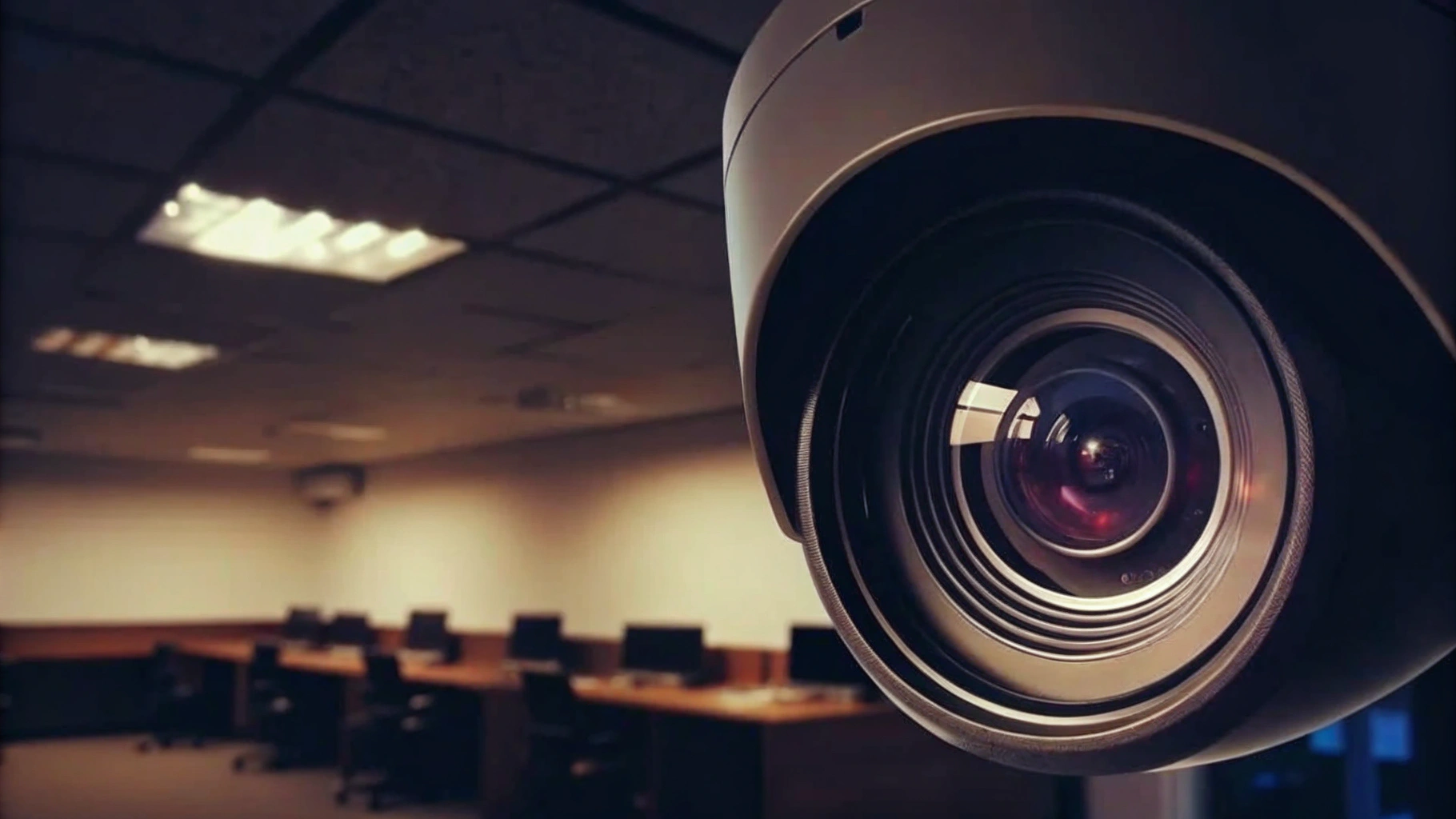
CCTV remains one of the most consistently cited tools in office protection. Cameras function as both a deterrent — visible surveillance discourages opportunist crime — and as an evidential resource, since recorded footage is often the primary source of information when investigating an incident. Strategically positioned cameras covering entrances, corridors, and goods-in areas materially reduce the blind spots where incidents typically occur.
Understanding Hostile Vehicle Mitigation (HVM) is increasingly relevant for corporate and mixed-use sites in central London. HVM refers to physical measures — bollards, barriers, planters, or vehicle-restriction systems — designed to prevent a vehicle being used as a weapon against a building or the people around it. Combined with manned guarding, HVM forms a layered defence that addresses a threat CCTV and access control alone cannot.
Why Do Office Security Systems Matter?
Office security systems matter because they form the first line of defence against theft, vandalism, and unauthorised access, protecting both physical assets and sensitive information. A well-executed system also supports employee morale and productivity: staff who feel safe at work are better placed to focus on their jobs. As John F. Kennedy observed, "There are risks and costs to a programme of action — but they are far less than the long-range cost of comfortable inaction" — a principle that applies directly to proactive protective measures in the workplace.
Priority First applies this proactive approach across corporate, residential, and construction site environments, treating security as an operational responsibility rather than a bolt-on service. Priority First currently holds 37 client contracts on file, of which 28 are in Chelsea and Knightsbridge, and on these documented projects the company has combined key holding, CCTV oversight, and logistics management to keep sites secure and organised throughout a build or occupancy period. That density of prime central London coverage is one reason clients in Chelsea and Knightsbridge choose a single accountable partner rather than piecing together separate contractors for guarding, keyholding, and facilities — an approach set out further in this guide to manned guarding services in central London.
Robust systems also help businesses meet legal and insurance obligations, reducing liability exposure. Organisations with well-maintained protective measures commonly report fewer incidents of theft and vandalism, which in turn supports staff focus and satisfaction. In an environment where cyber and physical risks increasingly overlap, integrating physical safeguards with cybersecurity measures is essential: a compromised access control system, for instance, can be both a physical and a data security failure. Security professionals consistently emphasise that situational awareness among staff — the ability to notice and respond appropriately to unusual activity — remains one of the most cost-effective layers of protection an organisation can build.
Ultimately, effective office security systems protect a company's reputation as well as its operations. They demonstrate to clients, staff, and insurers that risk is being actively managed, which supports business continuity when something does go wrong.
What Are the Key Components of an Office Security System?
The key components of an office security system are surveillance cameras, alarm systems, access control mechanisms, monitoring services, environmental sensors, and integrated software — each addressing a different vulnerability, and together forming a layered defence rather than relying on any single measure.
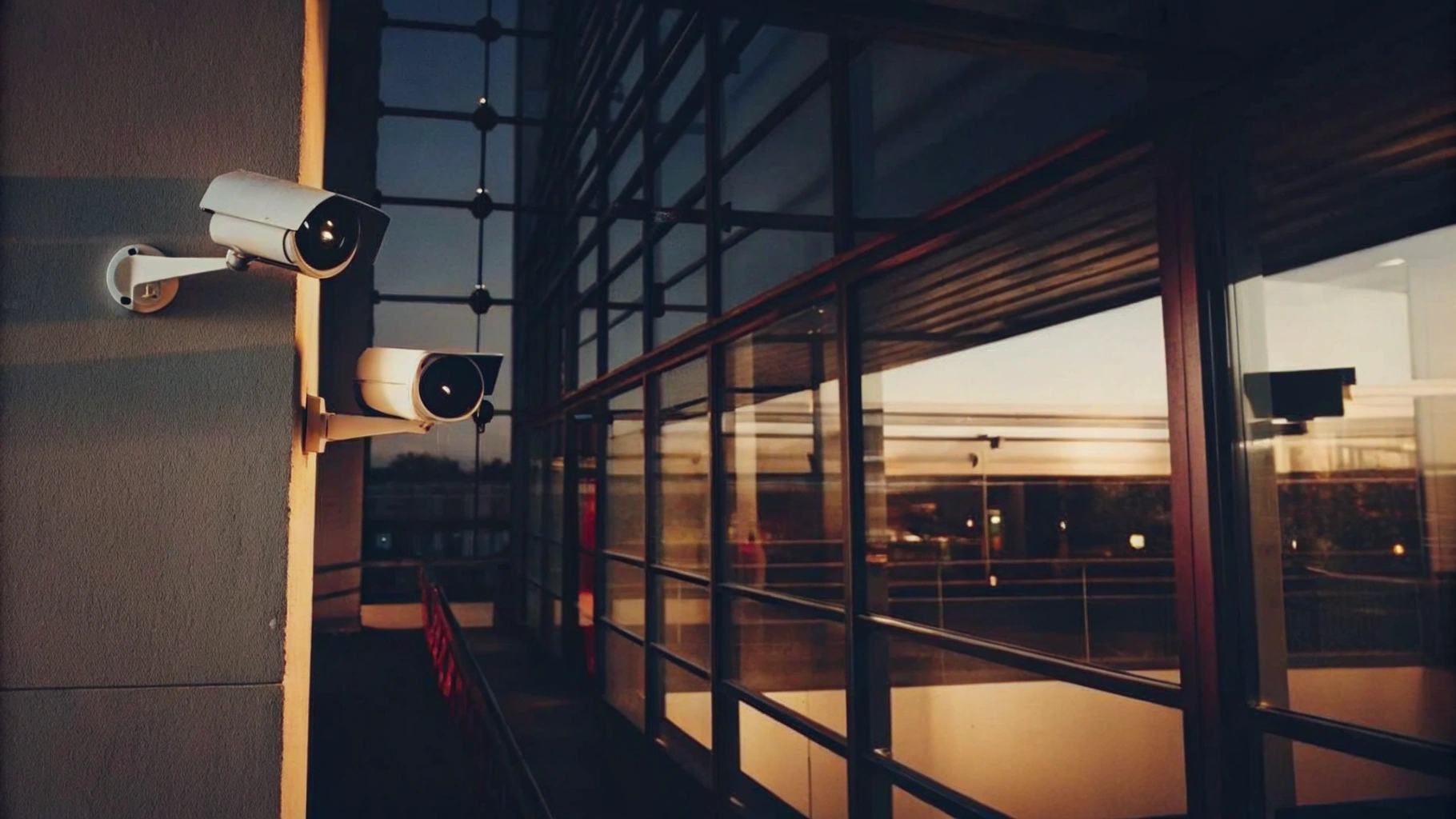
- Surveillance Cameras: Critical for visual monitoring, cameras deter criminal activity while providing evidence for incident investigations. Visible cameras both discourage opportunist crime and help identify offenders after an incident.
- Alarm Systems: Intruder alarms alert personnel to unauthorised entry, enabling a swift response. Modern alarm technology integrates with other security networks — for example triggering CCTV recording or notifying a keyholder — strengthening the overall strategy.
- Access Control Mechanisms: Keycards, biometric scanners, or PIN codes regulate entry to sensitive areas, ensuring only authorised personnel can reach them and reducing the risk of unauthorised access. This is covered in more detail in guides to access control for residential and commercial buildings.
- Monitoring Services: Continuous 24/7 oversight — often via a central control room covering multiple sites — ensures alerts are addressed promptly, reinforcing every other component in the system.
- Environmental Sensors: Devices detecting hazards such as smoke or water leaks contribute to broader risk management. Ignoring these risks can lead to significant financial losses and operational disruption well beyond a typical security incident.
- Integrated Software Solutions: Modern platforms allow remote observation and administration of security protocols, enabling real-time adjustments as circumstances change and giving managers a single view across multiple sites.
Together, these components form a thorough defence against the range of vulnerabilities an office building faces. A related point often missed in guides to this topic: having these components installed is not the same as knowing they are being used correctly day to day. A patrol schedule and a working camera are only useful if someone can prove, after the fact, that the checkpoint was actually visited or the footage actually reviewed.

What Types of Office Security Systems Are There?
The main types of office security system are intruder alarms, CCTV networks, access control systems, and integrated fire and life-safety systems — each addressing a distinct risk, and increasingly combined into a single managed platform rather than operated separately.
Intruder alarm systems identify unauthorised access and notify security staff or, where appropriate, the police. Businesses that install intruder alarms commonly report a change in risk profile afterwards, since the presence of an active alarm changes the calculation for an opportunist offender. Without such measures, theft remains a persistent and often underestimated risk for office-based businesses.
CCTV networks provide real-time observation and recorded evidence of activity both indoors and outdoors, acting as both a deterrent to criminal activity and a tool for real-time threat detection. This is particularly valuable on construction sites, where materials and equipment are at risk outside working hours, and on multi-property residential estates, where a managing agent overseeing night patrols across several buildings needs a consistent, comparable evidence trail from each site.
Access control systems limit entry to sensitive areas, ensuring only authorised personnel can pass through. Integrating access control with other security measures — rather than running it as a standalone system — removes the data silos that otherwise make it harder to build a full picture of who was where and when.
Integrated fire alarms and safety systems protect against fire risk and support compliance with fire safety regulations. These systems protect lives first and property second, and neglecting them can have serious safety and financial consequences well beyond the immediate cost of installation.
Merging these technologies into a single platform enables centralised management and oversight. Priority First's approach is to integrate its services with a client's existing infrastructure, minimising disruption while strengthening the overall system. On its largest managed portfolio, Priority First now runs 24 sites on one platform — up from 18 at the previous count — with more than 4,900 photo-backed patrols completed, each one carrying officer ID, GPS location and a timestamp. That evidence standard means a missed checkpoint shows up as a visible gap in the record, rather than passing silently as it would on a paper log. The same principle applies to standalone security guard services covering a single office building rather than a full portfolio.
As digital and physical threats increasingly overlap, combining IT security with physical protective measures is essential for thorough safeguarding — a compromised access control system or an unmonitored server room is as much a data risk as a physical one. Understanding these categories allows businesses to select the most suitable combination of measures for their own risk profile, supporting both security and broader operational objectives. Retail environments face a related version of this challenge, discussed further in guides to luxury retail security in the UK and security for luxury retail premises in London.

Your Office Security System Checklist
Use this checklist as a starting point when reviewing or upgrading your own office security setup:
- Map your vulnerabilities — identify entrances, delivery points, car parks, and out-of-hours risk areas before choosing equipment.
- Confirm licensing compliance — check that any manned guarding personnel hold an individual SIA licence, as required under the Private Security Industry Act 2001.
- Install layered CCTV coverage — prioritise entrances, corridors, and goods-in areas, not just the reception desk.
- Set up access control with an audit trail — choose a system that logs who accessed what and when, not just one that locks doors.
- Integrate alarms with monitoring — ensure intruder and fire alarms feed into a monitored response, not just a local siren.
- Add environmental sensors where relevant — smoke and water-leak detection can prevent losses that a camera alone would never catch.
- Demand evidence, not assumptions — require that patrols and checkpoint visits are logged with a photo, GPS location, and timestamp, so a missed check shows up as a gap rather than a silent failure.
- Review the system periodically — as staff numbers, site layout, or threat levels change, revisit whether the original setup still fits.
Conclusion
Office security systems protect not only the physical premises but also the valuable data and personnel within an organisation. By combining the right technologies and protocols, businesses build a layered defence against a wide range of threats, supporting a safer and more resilient working environment.
Effective systems generally comprise four core components:
- Surveillance cameras
- Alarm systems
- Access control mechanisms
- Environmental sensors
Each element contributes to a layered strategy, improving both deterrence and response speed. The ongoing integration of AI and IoT into these systems is making protection more proactive, shifting the emphasis from recording incidents after the fact to identifying and interrupting them as they happen.
The core lesson remains straightforward: as threats evolve, businesses need to keep pace with their protective measures rather than treating an installation as a one-off project. Investing in a well-rounded, verifiable security framework is a strategic necessity — it supports employee morale, helps meet compliance and insurance obligations, and protects organisational reputation. Companies that treat this as ongoing operational management, not a single purchase, are best placed to keep their people, premises, and data secure over the long term.
How Priority First Turns Office Security Systems Into Provable Protection
Most of the components covered in this guide — CCTV, access control, alarms, monitoring — are only as good as the evidence they produce. A camera that nobody reviews and a patrol log that nobody can verify offer the appearance of security without the substance of it. This is the gap Priority First was built to close: combining SIA-licensed manned guarding, keyholding and alarm response, CCTV monitoring, and full facilities management under one accountable provider, so that every part of an office's security system works from the same information rather than several disconnected suppliers.
The proof is in the operational detail. On one mixed-use development, Priority First increased photographed checkpoint completions from zero before onboarding to 152 photographed checkpoints, with 100% of checkpoint completions now carrying a watermarked photo — up from 0% beforehand. On new sites, Priority First has taken buildings live within a fortnight, including a 10-checkpoint serviced residence, and can typically produce a provable first patrol within days rather than the weeks it usually takes a new contractor to bed in. Priority First holds a 5.0-star rating from 44 Google reviews and reports a 100% customer satisfaction rate across its client base.
If your current office security setup relies on trust rather than evidence — paper logs, unverifiable patrol claims, or CCTV nobody actively monitors — it's worth a conversation. Get in touch with Priority First for a security assessment and a quote tailored to your building, covering prime central London, West London, and contracts further afield in the West Midlands and Bedfordshire.
Frequently Asked Questions
What are office security systems? Office security systems are combinations of technologies and protocols designed to protect physical locations, personnel, and confidential data from various risks. Key components include surveillance cameras, alarm devices, access control methods, and monitoring services, working together as a single protective framework rather than as standalone tools.
How does Priority First enhance existing office security systems? Priority First integrates its services with a client's existing protection infrastructure rather than replacing it wholesale. This includes combining SIA-licensed manned guarding and CCTV monitoring with the building's current setup, aiming for minimal disruption and a verifiable, photo-backed record of every patrol and checkpoint.
What role do technological advancements play in office security? AI and IoT have measurably changed office security in recent years. Smart cameras with AI-based analytics can flag suspicious behaviour in real time and alert personnel immediately, moving security from a reactive, footage-review model towards a more proactive one.
What trends are shaping office security systems going into 2026? Organisations are continuing to adopt more sophisticated access control, including programmable entry cards that give detailed oversight of who accessed which area and when. This supports both day-to-day security management and after-the-fact investigation when an incident occurs.
Why are surveillance cameras critical in office protection? Surveillance cameras act as both a deterrent against criminal activity and a key evidential resource for investigating incidents after they happen. Strategically positioned cameras covering entrances, corridors, and delivery points reduce the blind spots where most incidents occur.
What is Hostile Vehicle Mitigation (HVM)? Hostile Vehicle Mitigation (HVM) is the use of physical measures — such as bollards and barriers — to prevent a vehicle being used as a weapon against a building or the people near it. Combined with manned guarding, HVM forms a layered defence appropriate to higher-risk corporate and mixed-use sites.
Why is a holistic approach to office security systems important? A holistic approach matters because individual security measures — a camera here, an alarm there — leave gaps that a coordinated system does not. Combining physical measures with active monitoring and a verifiable evidence trail, such as photo-backed patrol logs, gives organisations a genuinely defensible security posture rather than a collection of disconnected tools.