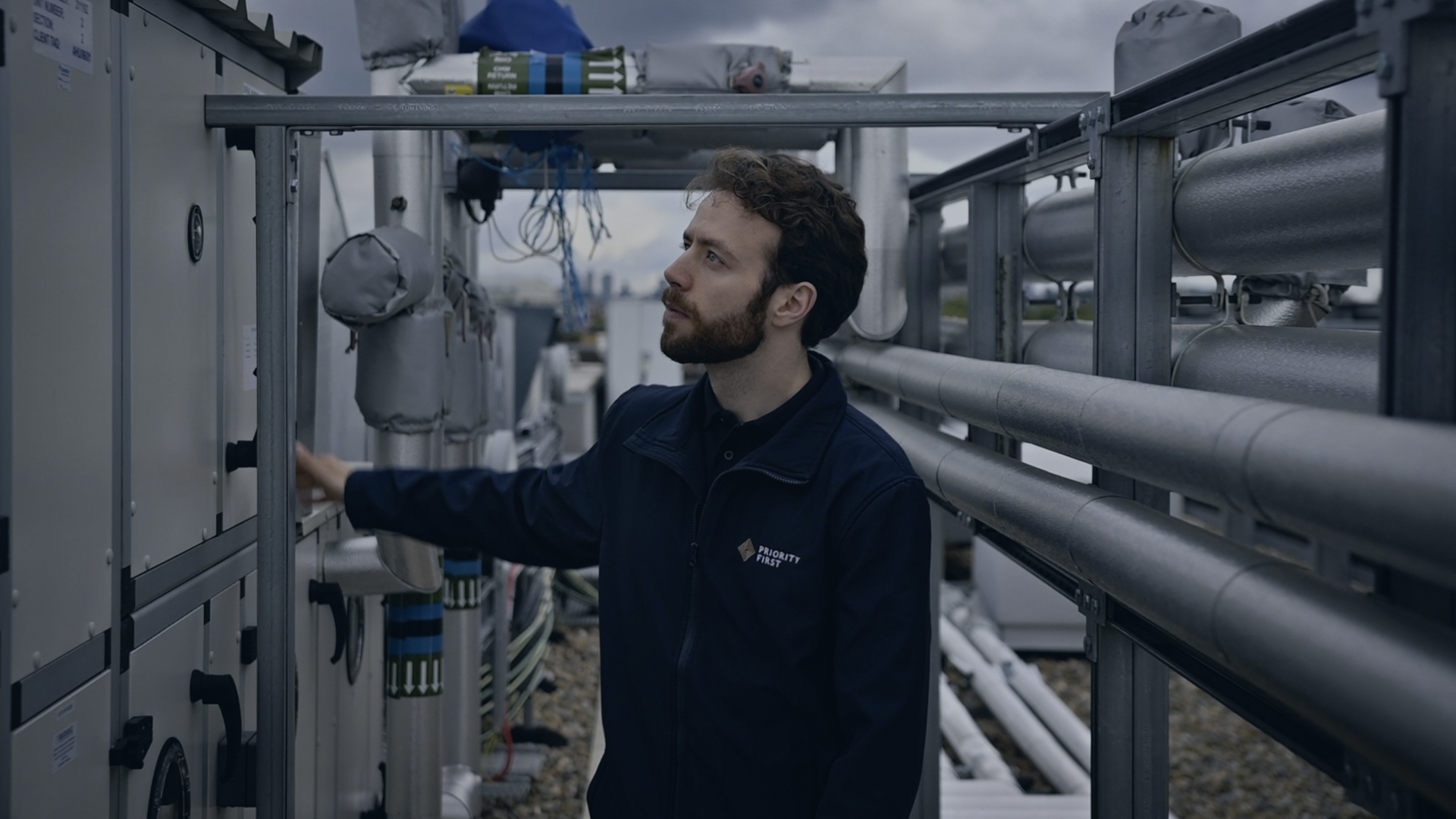
9 Essential Site Security Systems for Construction Managers


Last updated: 7 September 2026
Quick Answer
Construction site theft costs UK businesses over £1 million a week, according to industry loss data reported by the Chartered Institute of Building (CIOB). The nine most effective countermeasures are perimeter barriers, CCTV monitoring, lighting, intruder alarms, access control, manned guarding, mobile patrols, DIY sensor kits and integrated smart-site platforms — layered together rather than used alone.
Key Takeaways
- Construction theft costs UK businesses over £1 million a week, and the sector loses more than £800 million a year to theft and vandalism.
- Approximately 92% of construction locations are affected by theft or vandalism at some point.
- Priority First has secured over £1.6 billion in client assets and holds a 5.0-star Google rating from 44 reviews (as of 2026).
- No single system stops construction theft — CCTV, access control, lighting and manned patrols work best layered together rather than deployed in isolation.
- DIY sensor kits suit tight budgets, but they require self-monitoring and lack the rapid-response capability of a professional guarding contract.
What Is Construction Site Security?
Construction site security is the combination of physical barriers, electronic surveillance, access control and personnel that protects a building project's materials, plant and workforce from theft, vandalism and unauthorised entry. It differs from permanent-building security because construction sites change layout weekly, often lack fixed power and network infrastructure, and hold large volumes of resaleable materials — timber, copper, tools and plant machinery — in areas that are hard to fence completely.
The Chartered Institute of Building (CIOB) reports that UK construction theft costs businesses over £1 million a week, with total annual losses from theft and vandalism exceeding £800 million (source: CIOB). The CIOB also states that around 92% of construction locations are affected by theft or vandalism at some point during a project. These figures explain why site security is treated as a core project-management function rather than an optional add-on: a single theft of plant or materials can halt a project timeline as effectively as a supply-chain delay.
Effective site security is not one product but a layered system — perimeter control, surveillance, lighting, access management, alarms and human patrols working together, each covering the gaps the others leave.
How Does Priority First Provide Tailored Construction Site Security?
Priority First provides construction site security through a combination of SIA-licensed manned guarding, CCTV monitoring and rapid-response patrols, tailored to each site's layout and risk profile. Priority First has secured over £1.6 billion in client assets and holds a 5.0-star Google rating from 44 reviews, drawing on its own operational data across prime central London and West London projects (as of 2026).
Construction site theft costs UK businesses over £1 million a week, according to CIOB data, which is why ignoring site security systems leads directly to financial loss, operational disruption and reputational damage on live projects.
Priority First addresses these risks with services built around the specific demands of construction environments. Its offering includes:
- Dedicated on-site protection teams of SIA-licensed officers
- Advanced CCTV systems with photo-backed patrol evidence
- Rapid-response mobile patrols
On one Priority First-managed mixed-use development, officers logged 152 photographed checkpoints, up from zero before onboarding, with 100% of checkpoint completions now carrying a watermarked photo. This kind of evidence trail lets project managers verify that patrols actually happened, rather than relying on an unverifiable paper log.
Early investment in these measures is a way of avoiding larger losses later: a stolen generator or a vandalised plant cabin can cost a project days of delay, well beyond the replacement cost of the item itself.
What Do Professional Monitoring and Installation Involve?
Professional monitoring and installation means a security provider designs, fits and continuously operates a site's CCTV, alarm and access-control systems, rather than the project team self-managing them. The construction sector's £800 million-plus annual losses to theft and vandalism, as reported by the CIOB, show why 24/7 professional monitoring — not just installed hardware — is the part that actually catches incidents as they happen.
Unmonitored cameras only provide evidence after a theft has occurred. Round-the-clock monitoring means an operator sees unauthorised access or suspicious activity and can trigger a response — a call to site management, a patrol dispatch, or contact with police — while the incident is still in progress.
CCTV monitoring works as both a deterrent and a real-time detection tool, since visible cameras discourage opportunistic theft while active monitoring allows immediate reaction to unusual movement. Priority First integrates monitoring and installation with a site's existing security setup, meaning cameras, alarms and manned patrols report into one system rather than operating as disconnected tools. Given that 92% of construction locations are affected by theft or vandalism, treating monitoring as a standing operational function — not a one-off install — is the practical takeaway for site managers.
For a broader view, see our full index of construction site security guides.
For more detail, see 10 Essential Construction Site Security Services for Managers.
Related reading: Compare Burglar Alarm Systems in Tonbridge 2026 | Top Options.
Which Systems Deter Intruders Most Effectively on Construction Sites?
Physical barriers combined with visible, monitored CCTV deter intruders most effectively on construction sites, because they raise the perceived risk of being caught before an intruder attempts entry. Allianz Cornhill estimates the construction sector loses around £800 million a year to crime (as of 2024), a figure that underlines why deterrence — not just detection — matters at the perimeter.
High-definition cameras with night-vision capability and motion-detection alerts extend deterrence beyond daylight hours, when most construction site theft occurs due to reduced footfall and low natural visibility. 24/7 CCTV monitoring means real-time oversight is available even when no one is physically on site, allowing a monitoring team to respond to suspicious activity as it happens rather than reviewing footage the next morning.
Priority First's integrated protective solutions connect CCTV, alarms and patrol schedules into a single operating picture, so a triggered alarm or a flagged camera event can prompt an immediate patrol response rather than sitting in a log unreviewed. This proactive layering approach helps protect materials and plant while keeping project timelines on track, since a theft-related delay typically costs a project far more in lost time than the stolen items themselves.
How Does Smart-Site Automation Improve Construction Security?
Smart-site automation improves construction security by connecting CCTV, smart locks, access control and alerting into one centralised platform, so a single dashboard shows the current state of every checkpoint on site rather than requiring separate systems to be checked individually. This lets a project manager monitor and control access remotely, which is particularly useful on multi-phase sites where personnel and subcontractors change daily.
Automated alerts and real-time monitoring let site managers respond to safety issues as they surface, instead of discovering a breach hours or days later during a routine check. Priority First's 24/7 CCTV monitoring service functions as both a deterrent and a real-time detection mechanism, keeping a site under continuous surveillance outside normal working hours when most opportunistic theft occurs.
On a 16-building prime estate managed by Priority First, patrol activity now runs at 250–280 photo-backed patrols per building — activity that was previously unprovable under a paper-based system. That level of granular, photographed evidence is what smart-site automation is designed to produce: a checkable record rather than a manager's word against an intruder's. Integrating this kind of platform with existing site security systems, rather than replacing them piecemeal, is what allows early investment in automation to translate into measurable risk reduction.
What Should Construction Site CCTV and Access Monitoring Include?
Construction site CCTV and access monitoring should include high-definition cameras at entry points, motion-detection alerts, cloud storage for recorded footage, and monitored entry devices at every access route onto the site. High-definition footage combined with strategically placed monitoring at entry points gives project managers a clear, timestamped account of who entered a site and when.
Real-time motion-detection notifications alert a manager or monitoring team the moment activity is detected outside working hours, rather than waiting for a scheduled footage review. Cloud storage means that recorded footage survives even if on-site hardware is damaged or stolen during an incident — a real risk on sites where the recording equipment itself is a theft target.
Construction theft costs UK businesses over £1 million a week, which is the scale of loss that proactive, continuously monitored CCTV is designed to reduce. Priority First's approach integrates CCTV monitoring with its existing guarding and patrol services, so a flagged camera event and manned response sit on the same system rather than requiring a manager to cross-reference two separate providers. On Priority First's largest managed portfolio, officers have completed over 4,900 photo-backed patrols, each carrying officer ID, GPS location and a timestamp — the kind of verifiable record that raw CCTV footage alone does not provide.
What Does a Budget DIY Security Setup Offer Construction Sites?
A budget DIY security setup offers construction managers motion sensors, door and window sensors, and a mobile app for real-time alerts, at a lower upfront cost than a professionally monitored contract. These systems are typically straightforward to install without specialist help, making them a practical option for smaller sites or short-duration projects where a full guarding contract isn't proportionate to the risk.
The trade-off is that DIY systems place the burden of monitoring on the project team itself. There is no monitoring centre watching for alerts around the clock, and no one dispatched automatically if a sensor triggers overnight — a project manager or site foreman has to see the mobile alert and decide how to act on it, which is harder to guarantee on a busy or unstaffed site.
Project managers weighing DIY against professional monitoring should consider site value, project duration and how quickly a response is genuinely needed if an alert fires. A short refurbishment with low-value materials on site may suit a DIY kit; a multi-phase development holding plant, copper and specialist equipment is a different risk profile, and is where a monitored contract with guaranteed response times — such as Priority First's SIA-licensed guarding and patrol services — becomes the more proportionate choice. Comparable reasoning applies across sectors: see this guide to retail security systems for how the same layered logic plays out in a different setting.
What Support Should Construction Managers Expect From a Security Provider?
Construction managers should expect a security provider to offer a responsive support team, transparent communication, and rapid deployment when an incident occurs — not just installed hardware. Priority First's support model is built around resolving inquiries and operational issues quickly enough that they don't disrupt an active project.
Priority First has documented 37 client contracts on file, of which 28 are in Chelsea and Knightsbridge, and holds a 5.0-star Google rating from 44 reviews (as of 2026). In one verified emergency instance, a Covent Garden site broken into overnight was called in at 12:30, had a quote agreed on the same call, and had an SIA-licensed officer on site by 14:30 — a two-hour turnaround from first contact to deployment.
That kind of documented response time matters more than generic reassurance, because a construction site's exposure to theft or vandalism is highest in the gap between an incident starting and a human responder arriving. A support team's value is best judged on concrete response evidence — contract numbers, deployment times, review ratings — rather than general claims of reliability.
How Do Smart Home and Access-Control Integrations Secure Construction Sites?
Smart home and access-control integrations secure construction sites by combining high-volume surveillance, staffed guarding and CCTV technologies into one system that regulates who and what moves through the site. Priority First's site logistics management service uses integrated access control to govern personnel and vehicle flow, ensuring only authorised individuals reach sensitive areas of a live site.
This kind of real-time monitoring allows a swift response to irregularities — an unrecognised vehicle at a delivery gate, or personnel accessing a restricted zone outside their shift — rather than discovering the issue after the fact. Coordinating deliveries and tracking personnel movements through a single platform also reduces operational friction: Priority First reports that 100% of deliveries on its managed sites are now photographed and signed out, replacing the paper delivery log that previously left no verifiable record.
Combining access control with logistics coordination does two things at once: it closes off unauthorised entry points and it removes the delays that come from manual, paper-based tracking of who and what is moving through a site on any given day.
What Are the Advantages of No-Contract Monitoring for Construction Projects?
No-contract monitoring lets construction managers choose a security plan without committing to a long-term agreement, which suits projects where the completion date or scope may shift. This flexibility matters because construction timelines regularly extend or compress, and a rigid multi-year monitoring contract can leave a project either under- or over-provisioned for its actual duration.
Priority First's no-contract approach to monitoring includes high-volume monitoring (HVM — high-volume monitoring of site activity across multiple cameras and checkpoints), manned guarding, mobile alerts and remote access, all without requiring a fixed-term commitment. On new sites, Priority First reports it can take a site live within a fortnight — including a recent example of a 10-checkpoint serviced residence — and typically achieves the first provable, photo-backed patrol within days of onboarding, rather than the weeks it can otherwise take to bed in a new security operation from a standing start.
Ignoring these risks by delaying professional monitoring can result in real financial and operational costs during exactly the period a site is least protected — early mobilisation, before permanent fencing and cameras are fully established. A flexible, no-contract structure lets construction managers scale monitoring up or down as a project moves through its phases, from groundworks through to handover, without renegotiating a fixed contract at every stage. For sites where guarding needs extend into ongoing occupied buildings after completion, this same flexibility carries over into services like manned guarding for central London sites.
Your Construction Site Security Checklist
- Fence and secure the full perimeter before materials or plant arrive on site.
- Install HD CCTV with night vision and motion detection at all entry points and material storage areas.
- Arrange 24/7 monitoring, not just recording, so alerts trigger a real-time response.
- Set up access control to log every person and vehicle entering the site.
- Confirm patrol evidence standards with your provider — photo-backed checkpoints with GPS and timestamp are harder to dispute than a paper log.
- Agree response times in writing before an incident occurs, not after.
- Review whether a DIY sensor kit or a monitored guarding contract better fits your site's value and duration.
- Reassess your security plan at every major project phase, since risk levels shift as the site progresses from groundworks to handover.
Conclusion
Site security systems are a core part of protecting a construction project, not a peripheral cost. The CIOB's figures — over £1 million lost to theft each week across UK construction, and 92% of construction locations affected by theft or vandalism at some point — make clear why perimeter control, CCTV, lighting, alarms, access control, manned guarding, mobile patrols and monitoring platforms are treated as standard project infrastructure rather than optional extras.
The nine systems covered here work best layered together: CCTV and lighting deter opportunistic theft, access control and manned guarding stop unauthorised entry, and monitoring platforms turn isolated alerts into a coordinated response. DIY sensor kits remain a reasonable option for smaller, shorter projects, while monitored contracts with guaranteed response times suit higher-value, multi-phase sites.
The wider lesson is straightforward: early investment in layered site security protects assets, keeps project timelines intact, and reduces the operational disruption that follows a theft or break-in. Treating security as a planning decision from day one, rather than a reaction to an incident, is what keeps a construction project resilient.
Get Tailored Construction Site Security From Priority First
Every system in this guide — CCTV, access control, lighting, alarms and manned patrols — is only as good as the evidence it produces when something goes wrong. Priority First is a Mayfair-headquartered (Companies House 14830917) security and facilities management company that builds construction site security around exactly that principle: photo-backed, timestamped, GPS-logged patrols rather than a paper log a manager has to take on trust.
On one Priority First-managed development, photographed checkpoints rose from zero to 152 after onboarding, with 100% of checkpoint completions now carrying a watermarked photo as standard — a concrete example of the accountability construction managers should expect from any provider covering their site.
If you manage a construction project in prime central London, West London, or further afield, get in touch with Priority First for a tailored security assessment and a quote based on your site's actual layout, value and phase.
Frequently Asked Questions
What are the main security challenges faced by construction sites?
Construction sites mainly face theft and vandalism, which lead to direct financial loss, operational disruption and reputational damage. Construction theft costs UK businesses over £1 million a week, with total annual losses from theft and vandalism exceeding £800 million.
How does Priority First Security Services address construction site security?
Priority First addresses construction site security with dedicated on-site protection teams, advanced CCTV systems, and rapid-response mobile patrols, all tailored to a site's specific layout and risk profile. Its services also include photo-backed patrol evidence, giving managers a verifiable record of every checkpoint completed.
What are the benefits of investing in site security systems?
Investing in site security systems reduces the risk of theft and vandalism, protects valuable materials and plant, and supports compliance with site safety obligations. It also frees project managers to focus on core project delivery rather than managing security incidents reactively.
What statistics highlight the importance of site security in the construction sector?
According to the CIOB, approximately 92% of UK construction locations are affected by theft or vandalism at some point, and the sector loses more than £800 million a year to these issues (source: CIOB).
How does Priority First ensure effective monitoring and response to security threats?
Priority First provides round-the-clock CCTV monitoring paired with rapid-response patrols, so suspicious activity triggers an immediate response rather than being reviewed after the fact. In one documented case, an officer reached a broken-into Covent Garden site within two hours of the initial call.
What features do Priority First's CCTV systems offer?
Priority First's CCTV systems include high-definition video, night-vision capability and motion-detection alerts, giving continuous coverage of a construction site around the clock.
Why is early investment in security measures recommended for construction sites?
Early investment in security measures is recommended because a single theft or vandalism incident can delay a project timeline far beyond the replacement cost of the stolen items. Establishing perimeter control, CCTV and monitoring before materials and plant arrive on site prevents the gap in coverage where most opportunistic theft occurs.
How much has Priority First secured in assets, and what does this signify?
Priority First has secured over £1.6 billion in client assets and holds a 5.0-star Google rating from 44 reviews (as of 2026), reflecting its operational track record across prime central London and West London construction and commercial sites.