


10 Key Benefits of Security CCTV for Construction Sites


Overview
Security CCTV on construction sites offers significant benefits, including enhanced safety compliance, theft deterrence, real-time monitoring, and improved team coordination. These elements collectively foster a more secure and efficient work environment. The reality is that advanced surveillance technology not only protects valuable assets and promotes adherence to safety protocols but also encourages accountability and communication among team members. This ultimately leads to successful project outcomes.
Ignoring the importance of security can have serious implications for construction projects. Financial losses from theft and safety breaches can quickly escalate, impacting overall project viability and reputation. In practise, investing in robust security measures is not merely an expense; it is a critical component of business continuity.
Priority First stands out as a pragmatic solution, offering proven strategies to mitigate risks effectively. With a track record of securing over £1.6bn in assets and ensuring rapid response times, Priority First exemplifies the value of early investment in security. By prioritising comprehensive surveillance solutions, construction firms can safeguard their operations and enhance overall productivity.
The lesson is clear: proactive security measures not only protect physical assets but also fortify the entire project framework against potential disruptions. Early investment in security translates to significant long-term savings, making it an essential consideration for construction professionals.
Introduction
Security on construction sites has emerged as a critical concern, particularly as the industry faces escalating issues of theft, vandalism, and compliance with safety regulations. This reality underscores the necessity for robust security measures, as construction theft alone costs UK businesses over £1 million a week. Ignoring these risks can lead to significant financial losses, operational disruptions, and reputational damage.
In this context, the integration of security CCTV systems presents a pragmatic solution. These systems not only provide surveillance but also establish a comprehensive strategy for protecting valuable assets and ensuring the safety of workers. As the construction landscape evolves, the question becomes clear: how can tailored CCTV solutions enhance security while promoting operational efficiency and compliance with safety standards?
This article explores the ten key benefits of implementing security CCTV for construction sites, illustrating how these advanced systems can transform safety protocols and safeguard investments in an increasingly demanding environment. Early investment in such security measures is not merely an expense; it is a critical step towards ensuring business continuity and resilience.
Priority First Security Services: Tailored CCTV Solutions for Construction Sites
Priority First Security Services provides tailored surveillance solutions, utilising security CCTV to address the unique safety challenges faced by building projects. By conducting a thorough assessment of each project's specific vulnerabilities, the company integrates advanced surveillance technology, such as security CCTV, that aligns with the distinct needs of contractors and developers. This customised approach guarantees that every construction site is equipped with the most effective security CCTV monitoring systems, significantly enhancing safety and operational efficiency.
Recent advancements in surveillance technology, particularly AI-driven analytics and real-time monitoring capabilities, have transformed safety protocols at construction sites. These security CCTV systems provide continuous surveillance and facilitate immediate alerts for unauthorised access or suspicious activities, enabling swift responses to potential threats. The integration of intelligent features, such as motion detection and behavioural analysis, enhances the protective framework of security CCTV, ensuring compliance with safety regulations and reducing the risk of theft.
Priority First can seamlessly integrate its surveillance monitoring services with existing security CCTV systems, thereby enhancing the overall security infrastructure. The advantages of adopting advanced surveillance technology are considerable. Improved visibility into site operations cultivates a safer working environment, as employees are more likely to follow safety protocols when aware of being monitored. Additionally, the presence of visible security CCTV cameras serves as a deterrent against theft, which poses a growing challenge in the construction sector, costing UK businesses over £800 million annually.
As we approach 2025, the necessity for bespoke surveillance technology becomes increasingly evident. With the construction industry facing escalating demands to complete projects safely and on time while minimising environmental impact, the implementation of customised security CCTV solutions is essential. Experts emphasise that investing in advanced surveillance systems, such as security CCTV, not only protects valuable assets but also enhances the overall efficiency and success of construction projects. The shift towards more sustainable building practices underscores the need for innovative security strategies that align with eco-friendly objectives.
In summary, Priority First's commitment to delivering customised surveillance solutions ensures that construction sites are equipped with the latest advancements in monitoring technology, enhancing safety, protection, and operational efficiency. Furthermore, the integration of access control systems with security CCTV offers a comprehensive perspective on the security options available for building sites.

Enhanced Safety Compliance: How CCTV Supports Construction Site Regulations
Security CCTV systems are crucial for improving safety adherence on construction sites. Continuous monitoring with security CCTV ensures compliance with safety protocols, significantly reducing the risk of accidents and injuries. Priority First’s security CCTV monitoring service operates 24/7, providing oversight that serves as both a deterrent and a means for real-time threat detection. Our advanced features of security CCTV include:
- High-definition video recording
- Remote access to live feeds
- Automated alerts for unusual activities
Moreover, security CCTV footage serves as proof during safety evaluations, demonstrating compliance with regulations and fostering a culture of safety among employees. For instance, a building project in London effectively utilised our surveillance service to monitor adherence, resulting in a notable decrease in safety infractions. The reality is that our ability to integrate with existing protection frameworks ensures minimal disruption while enhancing your current setup, making our tailored safety solutions ideal for project managers focused on compliance, safety, and security CCTV implementation.
Theft Deterrence: Utilizing CCTV to Prevent Theft and Vandalism on Construction Sites
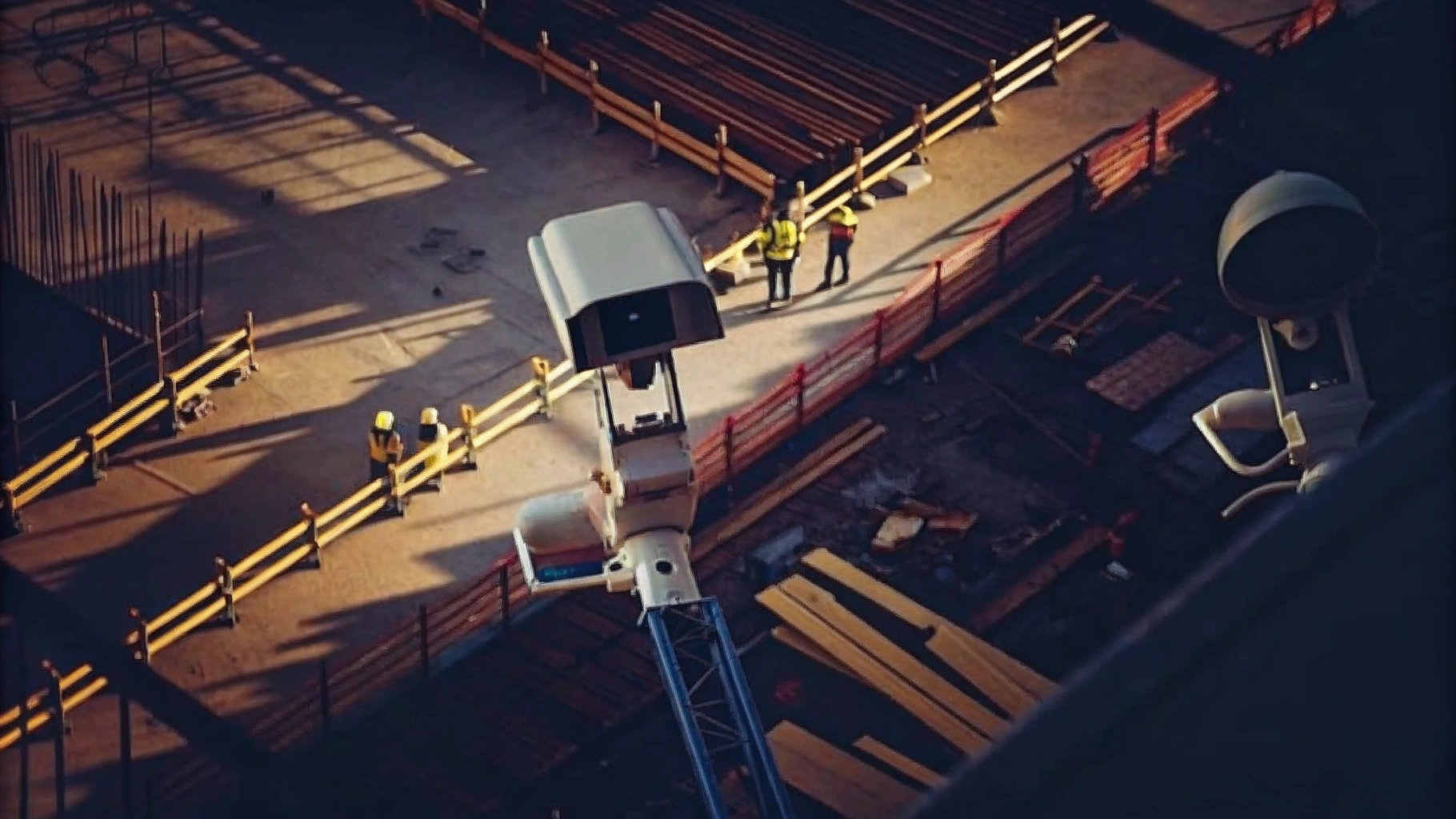
Security CCTV systems act as a formidable deterrent against theft and vandalism at construction sites. The mere presence of visible cameras significantly discourages potential criminals from targeting these locations. In fact, studies show that 91% of UK building site managers have encountered vandalism, highlighting the pressing need for effective security measures. Recorded footage not only assists in identifying and prosecuting offenders but also provides essential evidence for insurance claims, thereby safeguarding investments and maintaining project timelines.
The financial impact of theft in the construction sector is staggering, with losses estimated at £800 million annually. By implementing robust security CCTV systems, construction firms can effectively mitigate these risks. For instance, the deployment of portable surveillance towers ensures continuous monitoring, guaranteeing that no suspicious activity goes unnoticed. Moreover, advanced features such as motion detection and night vision enhance the effectiveness of these systems, particularly in low-light conditions.
Security experts emphasise that investing in advanced security CCTV systems is essential for both asset protection and employee safety. As one specialist noted, "By investing in advanced surveillance systems, you can safeguard your assets, ensure worker safety, and uphold your reputation." This proactive approach not only deters theft but also cultivates a secure environment conducive to productivity, ultimately keeping projects on schedule and within budget.

Real-Time Monitoring: The Advantage of Instant Surveillance on Construction Sites
Security CCTV systems provide a significant advantage by facilitating real-time surveillance of building locations. This immediate monitoring with security CCTV allows personnel to respond swiftly to incidents such as unauthorized access or safety breaches, thereby enhancing overall safety measures.
With continuous monitoring capabilities provided by security CCTV, building sites can maintain a secure environment, safeguarding both personnel and valuable assets. Statistics indicate that sites equipped with security CCTV and ongoing monitoring experience a reduction in incident-related delays by up to 28%.
Furthermore, the presence of visible security CCTV systems increases the likelihood of detecting suspicious behavior, which is crucial given that 21% of workers in the UK have reported witnessing crimes on-site in the past year. Security analysts assert that the use of security CCTV for real-time oversight is vital for preventing accidents and ensuring adherence to safety protocols.
By implementing security CCTV for instant surveillance, project managers can cultivate a safer work environment, significantly mitigating risks associated with theft, vandalism, and safety violations.
AI Integration: Leveraging Smart CCTV for Proactive Construction Site Security
The integration of AI into security CCTV systems is transforming safety on construction sites by enabling proactive monitoring and advanced threat detection. AI-driven cameras employ sophisticated algorithms to analyse behaviour patterns, swiftly identifying suspicious activities and sending immediate alerts to monitoring personnel. This capability significantly bolsters security measures, facilitating quicker responses to potential threats and diminishing the likelihood of incidents before they occur.
Notably, AI-enhanced systems have demonstrated a remarkable ability to reduce alert frequency by 73% over five weeks, indicating improved behaviour and compliance. Furthermore, these systems operate continuously, covering extensive areas and multiple feeds simultaneously, which is crucial in the dynamic construction environment.
By adopting advanced security CCTV technology, construction companies can enhance their protective framework while also boosting operational efficiency, ultimately resulting in safer and more productive workplaces. Additionally, AI systems can monitor personal protective equipment (PPE) compliance and restrict access to hazardous zones, further promoting worker safety.
However, it is vital to acknowledge that technology alone is insufficient. Implementing Hostile Vehicle Mitigation (HVM) strategies, such as physical barriers like bollards and reinforced planters, alongside trained personnel, is essential for comprehensive protection.
At Priority First, we advocate for a layered security approach that integrates advanced technology with manned guarding and customised physical protection services. This ensures that building sites are not only effectively supervised but also safeguarded against potential vehicle threats, creating a secure environment for all employees.

Improved Team Coordination: How CCTV Enhances Communication on Construction Sites
Surveillance systems are essential for enhancing team collaboration on building projects. They provide a visual summary of ongoing activities, enabling team members to gain a clearer understanding of operations, which is vital for effective communication. Enhanced visibility facilitates better planning and task allocation, ensuring that all personnel are aware of their responsibilities and the overall progress of the project.
Data indicates that building teams utilising surveillance cameras experience a notable increase in communication efficiency, with many project managers reporting improved collaboration and reduced misunderstandings. A project manager noted, 'The capability to visually oversee our location has changed how we communicate; we can resolve problems in real-time, which keeps our projects on schedule.'
This proactive approach not only streamlines operations but also cultivates a culture of accountability and teamwork, ultimately leading to more successful project outcomes.

Cost-Effectiveness: The Financial Benefits of CCTV Implementation on Construction Sites
Installing security CCTV systems at building locations provides significant long-term financial benefits. The reality is that effective security CCTV can significantly reduce theft and minimise workplace accidents, allowing companies to avoid costly delays and financial losses. For instance, a building project in Chelsea reported no break-ins after implementing a surveillance system, leading to considerable savings and enhanced project schedules.
That said, numerous insurance companies acknowledge the worth of surveillance systems. They often provide reductions for locations fitted with security CCTV, which enhances the financial feasibility of such investments and helps in creating a safer workplace. Studies indicate that places with security CCTV experience a 13% reduction in theft occurrences, highlighting the effectiveness of such monitored systems in deterring criminal behaviour.
In practise, Priority First’s video monitoring service is available 24/7, ensuring continuous observation even during out-of-office hours. This capability can further improve safety and operational efficiency. Security CCTV systems can reduce protection expenses by as much as 75% compared to conventional guarding techniques, making them a strategic essential for building companies.
The lesson is clear: the psychological effect of surveillance fosters a sense of safety among workers, enhancing compliance with safety protocols. Furthermore, Priority First focuses on combining security CCTV with current surveillance systems, offering customised solutions that enhance safety and efficiency in building locations.

Evidence Collection: The Legal Benefits of CCTV Footage for Construction Sites
Surveillance footage serves as a vital resource for collecting evidence regarding building locations. In instances of disputes, accidents, or theft, recorded video provides clear documentation of events, which is crucial for investigations and legal proceedings. This capability not only protects the interests of construction firms but also promotes accountability among workers.
For instance, during the development of a multi-use complex on Kings Road, Priority First implemented surveillance monitoring alongside key holding and logistics management. This approach ensured that the site remained secure and organised. Such tailored protective solutions enhance safety and provide invaluable proof in the event of incidents, highlighting the importance of comprehensive security measures like security CCTV in construction.
Comprehensive Security: Strengthening Overall Site Protection with CCTV
Security CCTV systems are essential elements of a comprehensive protection plan for construction sites. By integrating surveillance with access control and on-site personnel, companies can establish a multi-layered defence against potential threats. This holistic approach addresses all aspects of site safety, ensuring maximum protection for both assets and personnel.
The integration of security CCTV with access control systems enhances safety by restricting entry to authorised individuals and creating detailed audit trails. This synergy not only deters unauthorised access but also provides real-time alerts for suspicious activity, significantly lowering the chances of theft and vandalism. In fact, sites equipped with surveillance cameras see a 13% reduction in theft incidents, highlighting the effectiveness of this integration.
Moreover, the implementation of extensive protective measures, such as manned guarding and mobile patrols, further strengthens video surveillance. This multi-faceted strategy enables immediate responses to potential threats, fostering a safer working environment. As safety experts note, 'The incorporation of various protective measures, including security CCTV, is crucial for establishing a robust defence framework that can adapt to changing threats.'
Case studies demonstrate the advantages of this integrated strategy. For example, Priority First's customised surveillance solutions have led to zero break-ins during a multi-use complex development in Chelsea. Such results illustrate how a well-coordinated protective system can safeguard valuable materials and maintain project timelines.
Data indicates that the construction sector incurs over £800 million in annual losses due to theft, making the investment in integrated protective measures not just prudent but essential. By adopting a multi-tiered protection strategy, project managers can mitigate risks, enhance operational efficiency, and ultimately shield their initiatives from unforeseen disruptions.

Future Trends: Innovations in CCTV Technology for Enhanced Construction Site Security
The future of site safety through security CCTV technology is set to revolutionise how areas are monitored and protected. Innovations such as AI-driven analytics are increasingly prevalent, with studies showing that the adoption of these systems can result in a 73% reduction in false alerts. This allows security teams to concentrate on genuine threats. Furthermore, cloud-based storage solutions are gaining traction, eliminating the need for bulky on-site equipment and enhancing accessibility and scalability for project managers. Advancements in image resolution, including the emergence of 4K Ultra HD cameras, provide unparalleled clarity, making it easier to identify individuals and incidents even in challenging conditions.
As the construction industry grapples with significant challenges from theft and vandalism, the integration of these technologies is essential. For instance, thermal imaging cameras are now common, capable of detecting heat signatures in low-visibility situations, which is crucial for perimeter protection. Additionally, AI-driven monitoring systems can automatically alert teams of unauthorised access or breaches of safety protocols, significantly enhancing safety at the site.
Understanding Hostile Vehicle Mitigation (HVM) is vital for comprehensive protective strategies in corporate settings, including construction sites. HVM involves implementing physical measures to prevent vehicles from being weaponised, which is critical in high-risk areas. By combining HVM with advanced video surveillance and personnel guarding, construction sites can establish a layered protection strategy that not only safeguards assets but also reassures staff on-site.
Looking ahead, the trend towards IoT connectivity will further enhance surveillance capabilities, enabling seamless integration with other monitoring systems, such as access controls and alarms. This interconnectedness facilitates automated responses, such as locking doors when unusual behaviour is detected, forming a comprehensive protection ecosystem. By embracing these innovations and tailored security solutions from Priority First, including our expertise in security CCTV monitoring and integration, building firms can enhance their security measures and improve operational efficiency. To foster a safer and more productive work environment, construction site managers should consider implementing these advanced technologies and strategies.
Conclusion
The integration of security CCTV systems into construction sites marks a significant advancement in enhancing safety, efficiency, and overall project success. By employing tailored surveillance solutions, construction firms can effectively address unique vulnerabilities, ensuring that each site is equipped with the most effective monitoring technology available. This proactive approach not only safeguards valuable assets but also cultivates a culture of accountability and compliance among workers.
Key benefits of security CCTV include:
- Improved safety compliance
- Theft deterrence
- Real-time monitoring
- Integration of AI technologies
These advancements lead to a notable reduction in workplace incidents and theft, ultimately contributing to cost savings and enhanced operational efficiency. Furthermore, the evidence gathered through CCTV footage plays a crucial role in legal matters, underscoring the importance of comprehensive security measures in construction.
Looking ahead, the adoption of innovative CCTV technologies and smart surveillance solutions will be essential for construction site managers striving to create safer work environments. Embracing these advancements not only protects assets but also enhances team coordination and communication. As the construction industry continues to evolve, investing in tailored security CCTV systems will be vital for navigating future challenges and ensuring project success in a rapidly changing landscape.
Frequently Asked Questions
What types of security solutions does Priority First Security Services provide for construction sites?
Priority First Security Services offers tailored surveillance solutions using security CCTV to address the unique safety challenges of construction projects.
How does Priority First assess the security needs of a construction site?
The company conducts a thorough assessment of each project's specific vulnerabilities to integrate advanced surveillance technology that aligns with the distinct needs of contractors and developers.
What are the benefits of using advanced surveillance technology like security CCTV at construction sites?
Advanced surveillance technology enhances safety and operational efficiency by providing continuous monitoring, real-time alerts for unauthorised access, and features like motion detection and behavioural analysis.
How does security CCTV improve compliance with safety regulations on construction sites?
Continuous monitoring with security CCTV ensures adherence to safety protocols, significantly reducing the risk of accidents and injuries, while also providing proof of compliance during safety evaluations.
What features are included in Priority First’s security CCTV systems?
Key features include high-definition video recording, remote access to live feeds, and automated alerts for unusual activities.
How does security CCTV deter theft and vandalism at construction sites?
The visible presence of security CCTV cameras discourages potential criminals, and recorded footage assists in identifying offenders and providing evidence for insurance claims.
What is the estimated financial impact of theft in the construction sector?
Losses due to theft in the construction sector are estimated at £800 million annually.
What strategies can be implemented to enhance security at construction sites?
Implementing robust security CCTV systems, such as portable surveillance towers and advanced features like motion detection and night vision, can effectively mitigate risks.
Why is investing in advanced security CCTV systems important for construction firms?
Investing in these systems is essential for protecting assets, ensuring worker safety, and maintaining a secure environment conducive to productivity, ultimately keeping projects on schedule and within budget.
How does Priority First integrate its surveillance services with existing security systems?
Priority First can seamlessly integrate its surveillance monitoring services with existing security CCTV systems to enhance the overall security infrastructure without causing disruption.


