


Construction Site Security: 5 Best Practices (UK 2026)


Last updated: 3 June 2026
Overview
The article outlines five best practises for construction site security, which are essential for safeguarding valuable assets and ensuring safety. These practises encompass:
- Conducting comprehensive vulnerability assessments
- Implementing access control measures
- Utilising surveillance systems
- Training employees in security awareness
The aim is to reduce theft and vandalism while enhancing operational efficiency and ensuring compliance with safety regulations.
In the context of construction projects, security is often an underestimated function, yet it plays a critical role in overall business resilience. Ignoring security risks can lead to significant financial losses, operational disruptions, and reputational damage. The reality is that construction theft costs UK businesses over £1m a week, underscoring the urgent need for robust security measures.
Priority First offers a pragmatic approach to these challenges, providing tailored solutions that address the unique security needs of construction sites. By investing in these best practises early, businesses can prevent greater losses and ensure continuity. With a proven track record of securing over £1.6bn in assets and delivering rapid response times, Priority First positions itself as a trusted partner in enhancing site security.
Introduction
The construction industry faces a staggering challenge, with theft and vandalism leading to annual losses exceeding £800 million. This reality underscores the critical need for project managers to address security as a fundamental aspect of their operations. As they navigate the dual pressures of maintaining timelines and budgets, the implementation of robust security measures becomes not just beneficial, but essential. Ignoring these risks can result in significant financial, operational, and reputational consequences for businesses.
This article delves into five best practises for construction site security that not only protect valuable assets but also foster a culture of safety and accountability. In practise, effective safeguarding of construction sites is paramount, as it directly contributes to overall business resilience. How can project managers effectively safeguard their sites while navigating the complexities of compliance and operational efficiency? The answer lies in prioritising security as a core function of project management.
Understand the Importance of Construction Site Security
Due to the abundance of valuable equipment and materials, building locations are frequently targeted by criminals, which makes it essential to implement best practises for construction site security. The financial consequences of theft and vandalism in the UK building industry are significant, with annual losses estimated at around £800 million. Alarmingly, 92% of building project managers report encountering theft, while 91% have dealt with vandalism on their sites. These incidents disrupt project timelines, strain budgets, and damage reputations. The reality is that ensuring a secure location is crucial for compliance with health and safety regulations, and following the best practises for construction site security is essential for safeguarding both employees and the public.
By prioritising protection and implementing best practises for construction site security, project managers can effectively mitigate risks, enhance safety, and ensure that assignments remain on schedule and within budget. This proactive approach fosters a culture of safety and accountability on-site, ultimately leading to improved operational efficiency and heightened client satisfaction. The lesson is clear: early investment in security measures, which reflects the best practises for construction site security, not only prevents greater losses later but also aligns with broader business resilience strategies.
Conduct a Comprehensive Vulnerability Assessment
Conducting a thorough vulnerability evaluation begins with identifying potential security threats in accordance with the best practices for construction site security. This involves assessing physical barriers, entry points, and the surrounding environment. Engaging with stakeholders is crucial to gather insights on past incidents and current concerns. For example, during the development of a multi-use complex on Kings Road, Priority First provided key holding, CCTV monitoring, and logistics management, which effectively maintained site safety and organisation.
Utilising tools such as risk matrices allows for the prioritisation of vulnerabilities based on their potential impact and likelihood. If machinery theft poses a significant concern, it is essential to focus on securing storage areas and implementing robust access controls. This was exemplified in a logistics facility in Rugby, where Priority First employed canine services and staffed protection to effectively mitigate theft risks.
Regular revision of the evaluation is paramount; following best practices for construction site security involves conducting risk assessments monthly to adapt to evolving on-site conditions, ensuring that protective measures remain relevant and effective. Educating all onsite staff to identify and report unusual activities fosters a culture of awareness. Organisations that invest in awareness training have reported a 70% reduction in incidents.
By prioritising these evaluations, project managers can more effectively safeguard their endeavours and assets, as demonstrated by Priority First's successful protection of various building locations and properties.

Implement Access Control Measures and Monitor Entries
Establishing efficient entry control strategies is crucial for upholding safety on building locations. Clear protocols must specify who is allowed access and under what conditions. ID badges, biometric scanners, or digital entry cards should be utilised to restrict entry to authorised personnel only. Maintaining a visitor log is essential for accountability and emergency response, allowing for tracking all individuals present on-site. Furthermore, installing turnstiles or security barriers at entry points can prevent unauthorised access, thereby improving overall site safety. Consistently assessing and modifying entry permissions to reflect personnel changes is vital, ensuring that security remains robust throughout the project lifecycle.
The reality is that statistics show nearly 90% of tradespeople express concerns about tool theft, underscoring the necessity for strict control measures. Ignoring these risks can lead to significant financial losses, operational disruptions, and reputational damage. By adopting these best practises, project managers can significantly reduce the risk of unauthorised entry and enhance the safety of their operations. In practise, this proactive approach not only safeguards assets but also contributes to long-term business resilience.

Utilize Surveillance Systems for Continuous Monitoring
Surveillance systems, such as CCTV cameras, are among the best practises for construction site security to ensure continuous monitoring. Cameras should be strategically positioned to cover all entry points, high-value areas, and potential blind spots. Systems equipped with features like motion detection and night vision enhance effectiveness, particularly during non-working hours. Regularly reviewing footage is vital for identifying suspicious activity and refining response strategies.
Priority First specialises in comprehensive CCTV monitoring, delivering real-time surveillance that enhances protection and enables swift intervention in the event of potential threats. As Paul Goossens, Operations Director at SafeSite Facilities, noted, "CCTV is the ultimate double protection tool." This proactive approach not only deters criminal activity but also assists in compliance with safety regulations by documenting conditions and incidents, including whether workers are wearing essential gear such as hard hats and high-visibility clothing.
Moreover, implementing best practises for construction site security, including strict access control measures, is crucial for monitoring movement on-site, further bolstering protection and accountability. Priority First's tailored protection strategies, which encompass logistics management and facilities integration, ensure that construction sites operate efficiently and safely.

Train Employees in Security Awareness and Protocols
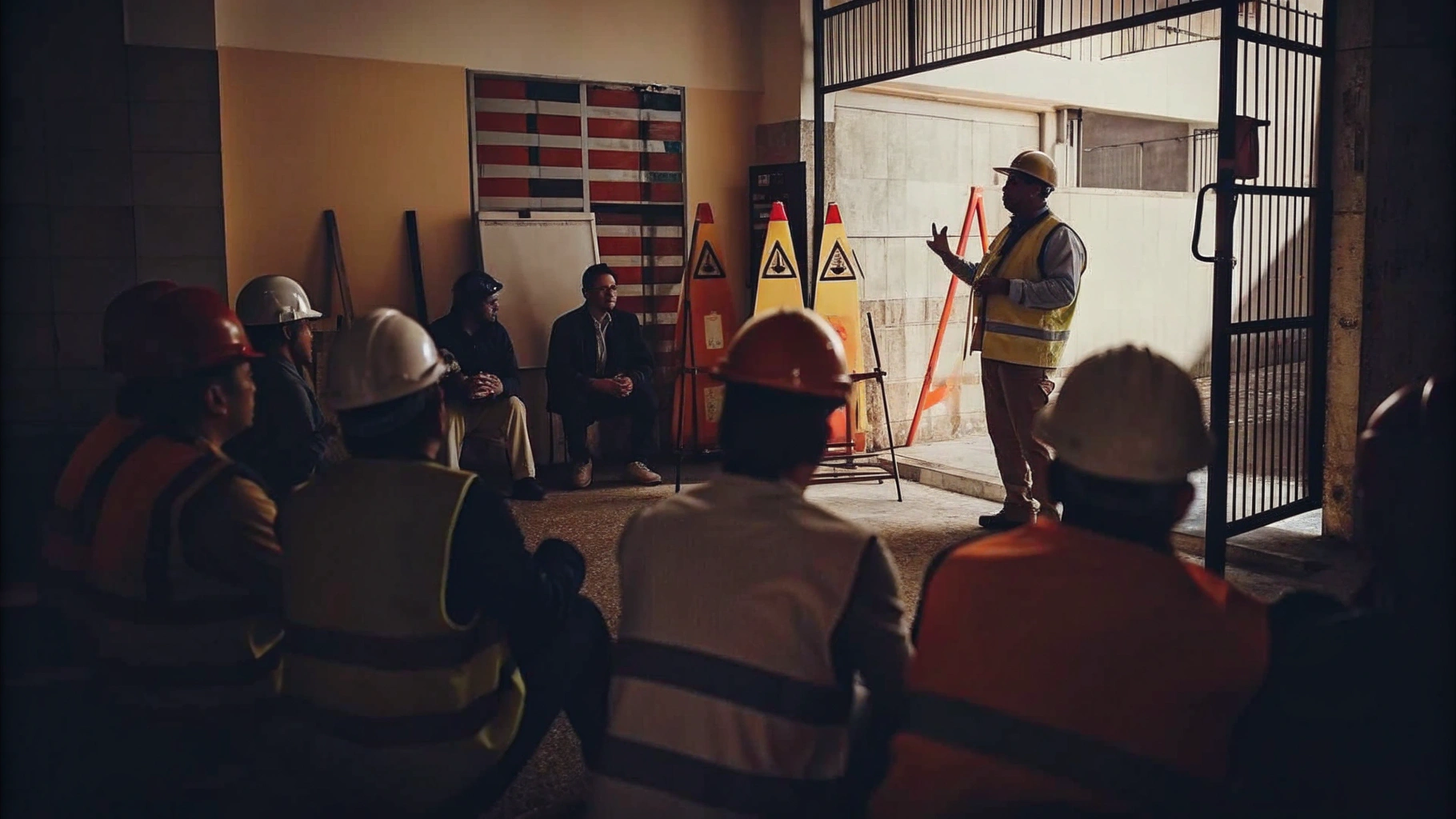
Educating staff on awareness is essential for safeguarding building locations from potential threats. Regular training sessions should emphasise the recognition of suspicious behaviour, comprehension of reporting procedures, and mastery of emergency response plans. Incorporating real-world scenarios during these sessions enhances the relevance and engagement of the content, allowing employees to connect with the material effectively. Encouraging open dialogue among team members regarding safety fosters a collaborative environment where everyone feels accountable for overall safety. By equipping workers with the necessary knowledge and skills, the best practises for construction site security are significantly strengthened, resulting in a marked reduction in the likelihood of incidents.
Priority First’s integrated security solutions complement these training initiatives by ensuring the implementation of best practises for construction site security. This encompasses everything from manned guarding to emergency response protocols, all tailored to the specific requirements of construction environments. The reality is that investing in staff education and implementing best practises for construction site security not only mitigates risks but also enhances business resilience. By prioritising safety, organisations can prevent greater losses in the future, reinforcing the notion that security is not merely an expense, but a fundamental aspect of business continuity.
Conclusion
Implementing best practises for construction site security is not merely a precaution; it is a vital strategy that protects valuable assets and ensures operational integrity. With theft and vandalism costing UK construction businesses over £1 million a week, prioritising security measures becomes essential for maintaining timelines, budgets, and reputations. By adopting a proactive approach, project managers can create a safer environment that promotes accountability and enhances overall efficiency.
Key strategies include:
- Conducting comprehensive vulnerability assessments to identify potential threats
- Implementing strict access control measures to regulate entry
- Utilising surveillance systems for continuous monitoring
- Training employees in security awareness
Each of these practises plays a crucial role in mitigating risks and safeguarding not only the physical assets of a construction site but also the well-being of workers and the surrounding community. Evidence shows that consistent application of these strategies leads to significant reductions in incidents and fosters a culture of safety on-site.
The reality is that the importance of robust security measures in construction cannot be overstated. As the industry continues to evolve, integrating these best practises is vital for ensuring business resilience and operational success. Project managers are encouraged to take immediate action—invest in security training, enhance surveillance systems, and regularly assess vulnerabilities. By doing so, they not only protect their projects but also contribute to a safer and more secure construction environment for all.
Frequently Asked Questions
Why is construction site security important?
Construction site security is crucial due to the high value of equipment and materials, which makes these sites targets for criminals. The UK building industry faces significant financial losses from theft and vandalism, with annual losses estimated at around £800 million. Ensuring security helps protect employees, the public, and project timelines, budgets, and reputations.
What are the consequences of theft and vandalism on construction sites?
Theft and vandalism disrupt project timelines, strain budgets, and damage the reputations of construction firms. A large percentage of project managers report experiencing these issues on their sites.
How can project managers mitigate risks associated with construction site security?
Project managers can mitigate risks by implementing best practises for construction site security, prioritising protection, conducting vulnerability assessments, and fostering a culture of safety and accountability on-site.
What is involved in conducting a comprehensive vulnerability assessment?
A comprehensive vulnerability assessment involves identifying potential security threats, assessing physical barriers and entry points, and engaging with stakeholders to gather insights on past incidents. Tools like risk matrices can help prioritise vulnerabilities based on their potential impact and likelihood.
How often should vulnerability assessments be revised?
Vulnerability assessments should be revised regularly, ideally on a monthly basis, to adapt to evolving on-site conditions and ensure that protective measures remain relevant and effective.
How can staff contribute to construction site security?
Educating all onsite staff to identify and report unusual activities fosters a culture of awareness, which can significantly reduce incidents. Organisations that invest in awareness training have reported a 70% reduction in incidents.
What role does early investment in security measures play?
Early investment in security measures helps prevent greater losses later and aligns with broader business resilience strategies, ultimately leading to improved operational efficiency and heightened client satisfaction.


