7 Ways Security Dogs Enhance Construction Site Safety (2026)


Last updated: 7 September 2026
Quick answer: Security dogs enhance construction site safety by deterring theft (sites using guard dogs report roughly 25% fewer break-ins, according to industry security providers), detecting hazards human patrols can miss, and acting as a force multiplier — one dog-and-handler team can cover ground equivalent to four non-canine patrols. Combined with manned guarding and CCTV, canine units help reduce disruption, insurance risk, and financial losses from theft and vandalism.
Key Takeaways
- Sites using guard dogs report approximately 25% fewer break-ins than sites relying solely on human patrols or static CCTV, according to industry canine security providers.
- A single canine patrol team can be as effective as four non-canine patrols for covering large or high-risk construction areas.
- The Guard Dogs Act 1975 requires a qualified handler to be present and in control whenever a guard dog patrols a site; a warning notice must also be displayed.
- Under the Dangerous Dogs Act 1991, a handler whose negligence allows a dog to injure someone can face fines and up to two years' imprisonment.
- Priority First has secured over £1.6 billion in client assets and holds a 5.0-star Google rating from 44 reviews, reflecting its track record across manned guarding, canine and facilities services.
Overview
Security dogs are trained canine units, paired with an SIA-licensed handler, deployed on construction sites to deter theft, detect hazards, and support wider site security operations. Evidence from canine security providers indicates that sites using guard dogs experience roughly 25% fewer break-ins than those relying on human patrols or surveillance alone, which both improves worker confidence and functions as a force multiplier for existing security teams.
The consequences of neglecting site security are concrete: unprotected construction projects face a higher risk of theft, unplanned downtime, and direct financial losses from stolen plant, tools, and materials. Priority First treats canine security as one part of a wider protective strategy — not a stand-alone fix — arguing that early investment in layered security (dogs, manned guarding, CCTV and access control together) tends to prevent larger losses later in a project's lifecycle.
Introduction
Construction site security has become a pressing concern across the UK, as sites continue to face theft, vandalism and safety hazards that threaten both project timelines and financial stability. These risks do not stay contained to one incident — a single break-in can delay a programme, trigger insurance claims, and damage a contractor's standing with a client.
Integrating security dogs into a site's protection plan is one practical response, working alongside — rather than instead of — manned guarding and CCTV monitoring. This article sets out how trained canines act as a visible deterrent, support hazard detection, and contribute to a safer working environment, along with the legal obligations that come with deploying a guard dog on a UK construction site.
Understanding both the benefits and the compliance requirements is essential before any site manager brings canine security onto a project. The sections below cover deterrence, hazard detection, training standards, worker confidence, versatility, legal compliance, cost, and how canine units fit alongside technology such as CCTV and AI-assisted monitoring.
What is a security dog unit?
A security dog unit is a paired deployment of one trained protection dog and one SIA-licensed handler, working together to patrol a site, deter intruders, and detect hazards or threats that a human patrol alone might miss. The dog is trained to specific standards for obedience, threat detection and controlled response, while the handler retains full control of the animal at all times, as required under the Guard Dogs Act 1975.
On a construction site, a security dog unit typically works alongside static or mobile manned guarding, CCTV monitoring, and access control at site gates. The unit is not a replacement for these measures but an addition: the dog's senses (hearing and smell far more sensitive than a human's) allow it to detect intruders, gas leaks, or unstable ground conditions before a human guard would notice them. Priority First delivers canine services as part of a wider security and facilities management offering that also includes manned guarding and CCTV monitoring, so that a canine unit is deployed as one layer within an integrated site protection plan rather than in isolation.
Priority First Security Services: Tailored Canine Security Solutions for Construction Sites
Priority First provides canine security solutions for construction sites as part of a broader facilities and security offering that also covers manned guarding, CCTV monitoring, and access control. Access control systems regulate the flow of personnel and vehicles onto a site, ensuring only authorised individuals reach sensitive areas, while a trained security dog and handler add a visible, mobile layer of deterrence and detection on top.
Security dogs are trained canine units that excel at identifying intruders, flagging site hazards, and acting as a visible deterrent against theft and vandalism. Their presence helps safeguard valuable plant and equipment and supports compliance with site health and safety standards, allowing projects to proceed with fewer disruptions.
Industry data suggests a single canine patrol team can be as effective as four non-canine patrols, providing rapid response coverage across a large site. Pairing high-visibility monitoring, manned guarding and CCTV with canine services is intended to reduce theft-related risk, which insurers may in turn reflect in lower premiums — a cost consideration worth raising directly with your insurer rather than assuming automatically.
By combining trained canine units with coordinated logistics management to minimise site delays, Priority First aims to keep construction locations secure and operational, on the view that early security investment prevents larger losses later in a project.
Deterrence: How Security Dogs Discourage Theft and Vandalism on Construction Sites
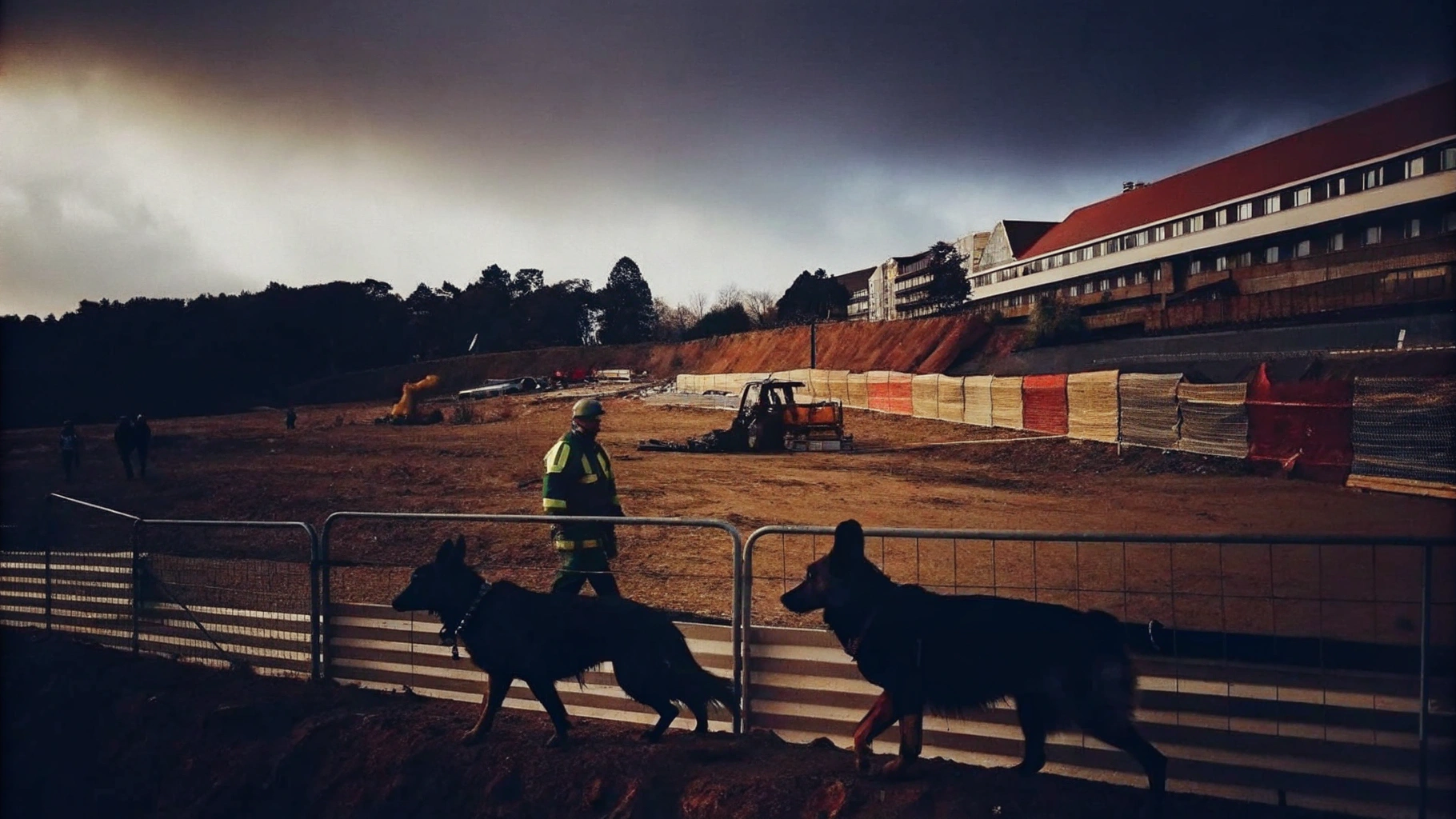
A security dog is one of the most visible deterrents against theft and vandalism on a construction site, because the presence of a trained dog measurably raises the risk of apprehension for a would-be intruder. According to canine security providers, sites employing guard dogs experience approximately 25% fewer break-ins than those relying solely on human patrols or CCTV, and a large proportion of intruders reportedly turn away specifically because a dog is present.
The pairing of a skilled handler with a well-trained dog supports prompt threat detection and helps create a safer working environment, letting site managers and workers focus on their tasks with fewer security concerns. On an upscale hotel development in Chelsea, the integration of canine security alongside manned guarding contributed to improved on-site safety and operational continuity — an example of how canine deterrence works best as part of a layered approach rather than a single measure deployed on its own.
Deploying professional, SIA-licensed canine handlers ensures security dogs are used to address site security challenges promptly, protecting essential tools and equipment while contributing to a generally safer site environment for workers and visitors.

Safety Enhancement: Utilising Security Dogs to Monitor Construction Site Hazards
Security dogs are trained to identify physical hazards on a construction site — including unstable structures and hazardous materials — that a human patrol may not detect in time. Their acute senses allow them to pick up gas leaks or unstable ground conditions and alert their handler before an incident occurs, giving site teams a proactive early-warning capability rather than a purely reactive one.
Priority First combines skilled handlers with trained security dogs as part of a wider protection strategy for construction sites and premises. Case studies from the wider security industry suggest that a visible guard dog not only deters criminal activity but also encourages a stronger day-to-day safety culture among site workers, who become more attentive to hazards themselves once a canine unit is part of the routine.
One trained security dog can, in some deployments, cover the ground that would otherwise require several static guards, freeing up budget for other essential project needs. Given that UK construction sites lose significant sums annually to theft and vandalism, and that the construction sector continues to record a disproportionate share of workplace injuries relative to other industries according to Health and Safety Executive (HSE) data, site managers have a clear incentive to strengthen safety protocols across the board — not just through canine deployment.
Pairing experienced handlers with well-trained security dogs is one practical way to strengthen both security and general site safety, supporting a more secure working environment for everyone on-site.
Threat Response: The Importance of Training Security Dogs for Construction Site Protection
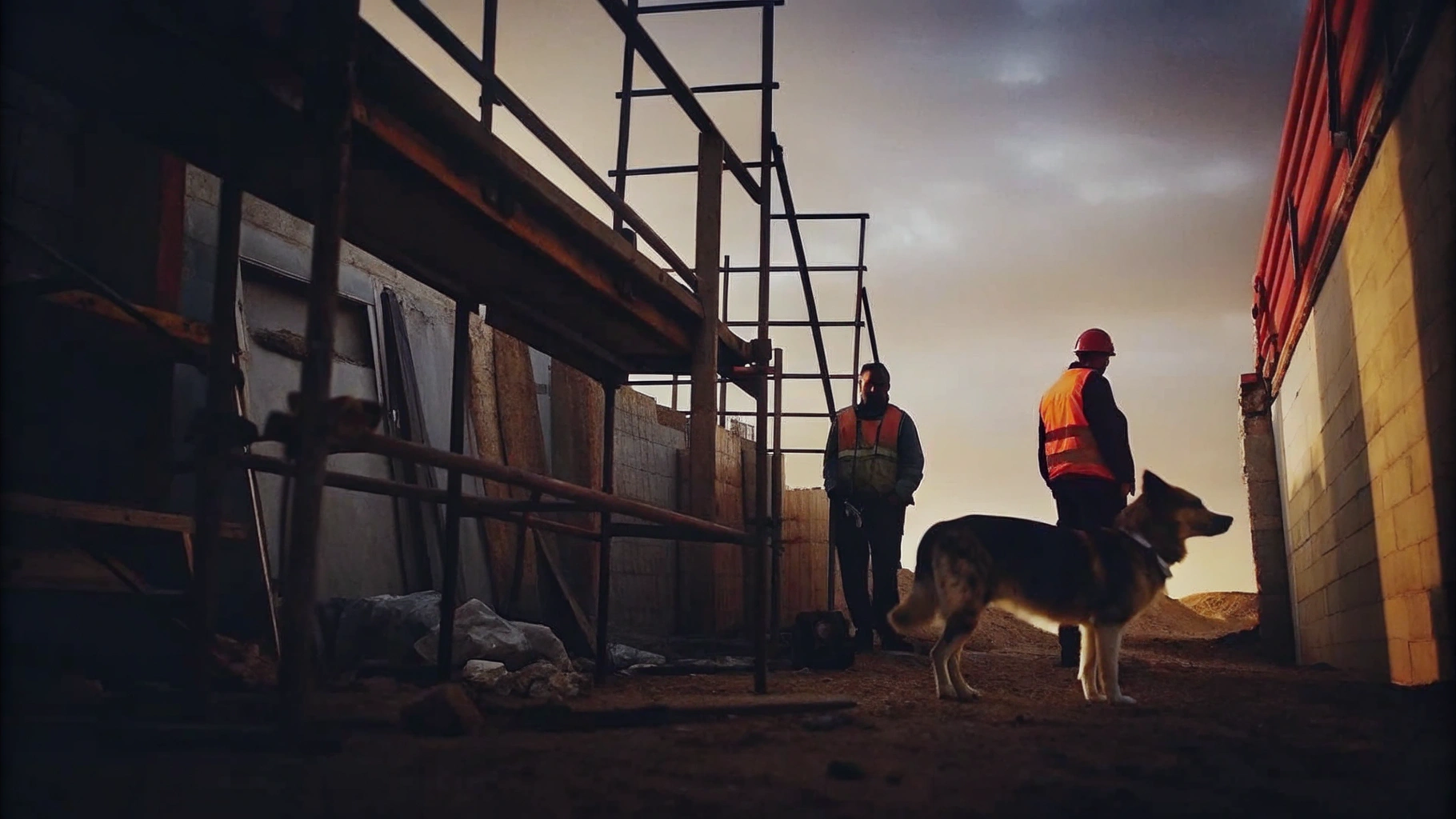
Training determines whether a security dog can respond reliably to real threats in a construction environment. A well-trained security dog can assess a situation quickly, alert its handler to danger, and — where necessary and lawful — help contain an intruder, making training the single biggest factor separating an effective canine unit from a liability.
Investing in a properly trained security dog is a strategic security decision, not just a protective add-on. Having a trained canine unit on-site can meaningfully reduce the likelihood of a security breach, helping protect both assets and a contractor's reputation with its client.
Skipping proper training carries real risk: an inadequately trained dog or handler can lead to financial losses, operational disruption, and potential legal liability if the dog is not kept under control, as required by the Guard Dogs Act 1975. The costs of theft and vandalism on an unprotected site can far exceed the cost of a properly trained canine unit.
Priority First takes a structured approach to canine deployment, positioning trained handlers and dogs within a wider security operation rather than as a stand-alone measure. Priority First's own data shows the company has protected over £1.6 billion in client assets across its security and facilities management contracts, reflecting the scale of sites it manages security for. The broader lesson for site managers is that early investment in properly trained security measures tends to prevent larger losses later in a project.
Psychological Security: Boosting Worker Confidence with Security Dogs on Site
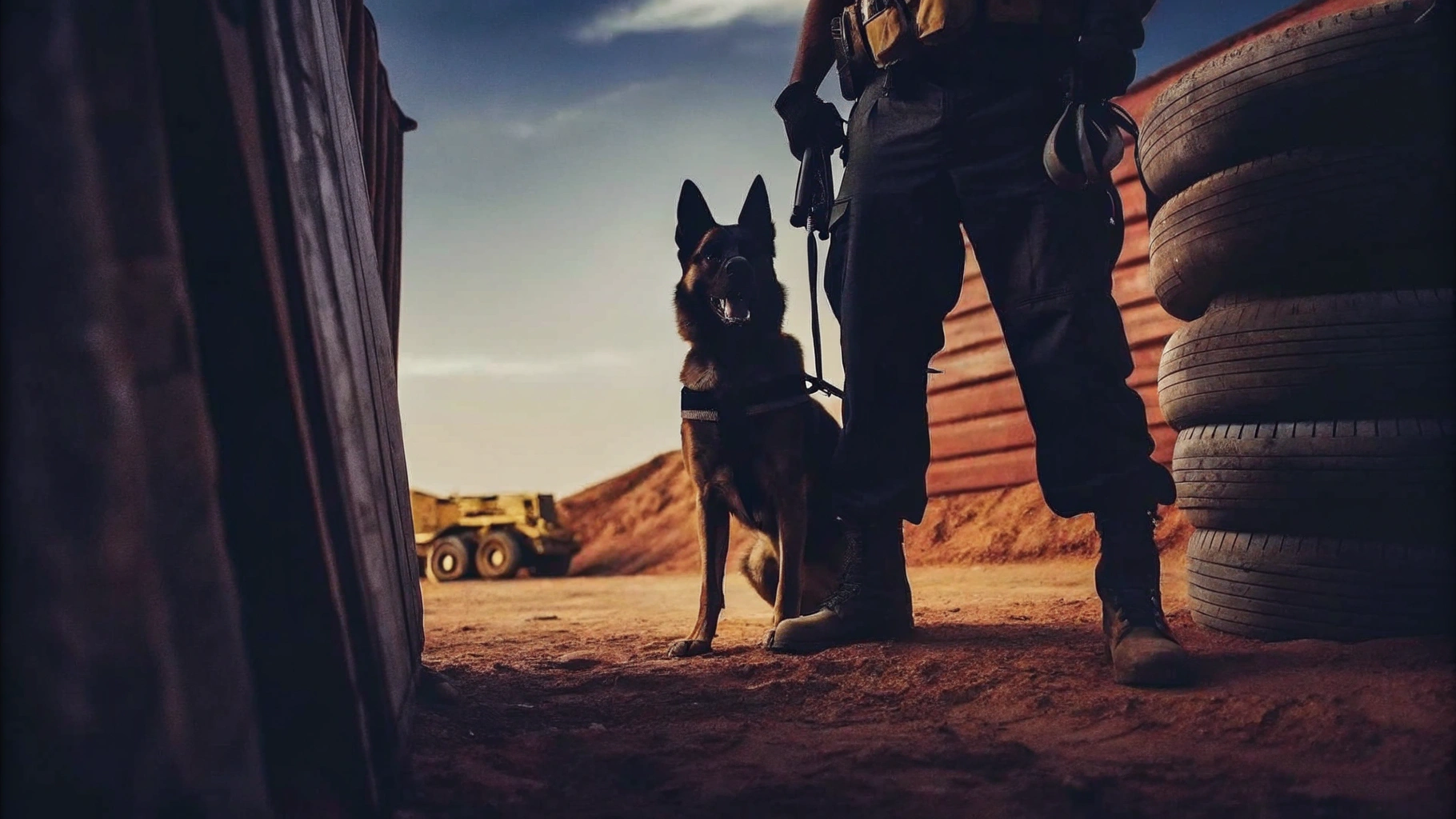
The visible presence of a security dog on a construction site can measurably improve worker confidence, letting employees concentrate on their tasks with fewer safety concerns weighing on them day to day. A trained canine unit, paired with a licensed handler, provides a form of psychological reassurance that supports a more focused and productive site environment.
Construction supervisors in the wider industry have observed that canine units not only deter potential trespassers but also build a sense of confidence among on-site personnel, contributing to a more settled working atmosphere. This is a softer benefit than deterrence statistics, but one that site managers consistently cite as a reason for retaining canine security beyond the initial theft-reduction case.
Priority First positions its canine deployments as tailored to each site's specific risk profile — a serviced residence, a live construction programme, and a vacant property each carry different hazards — reflecting a client-focused approach across its wider security guard services.
Versatility: The Multifunctional Role of Security Dogs in Construction Security
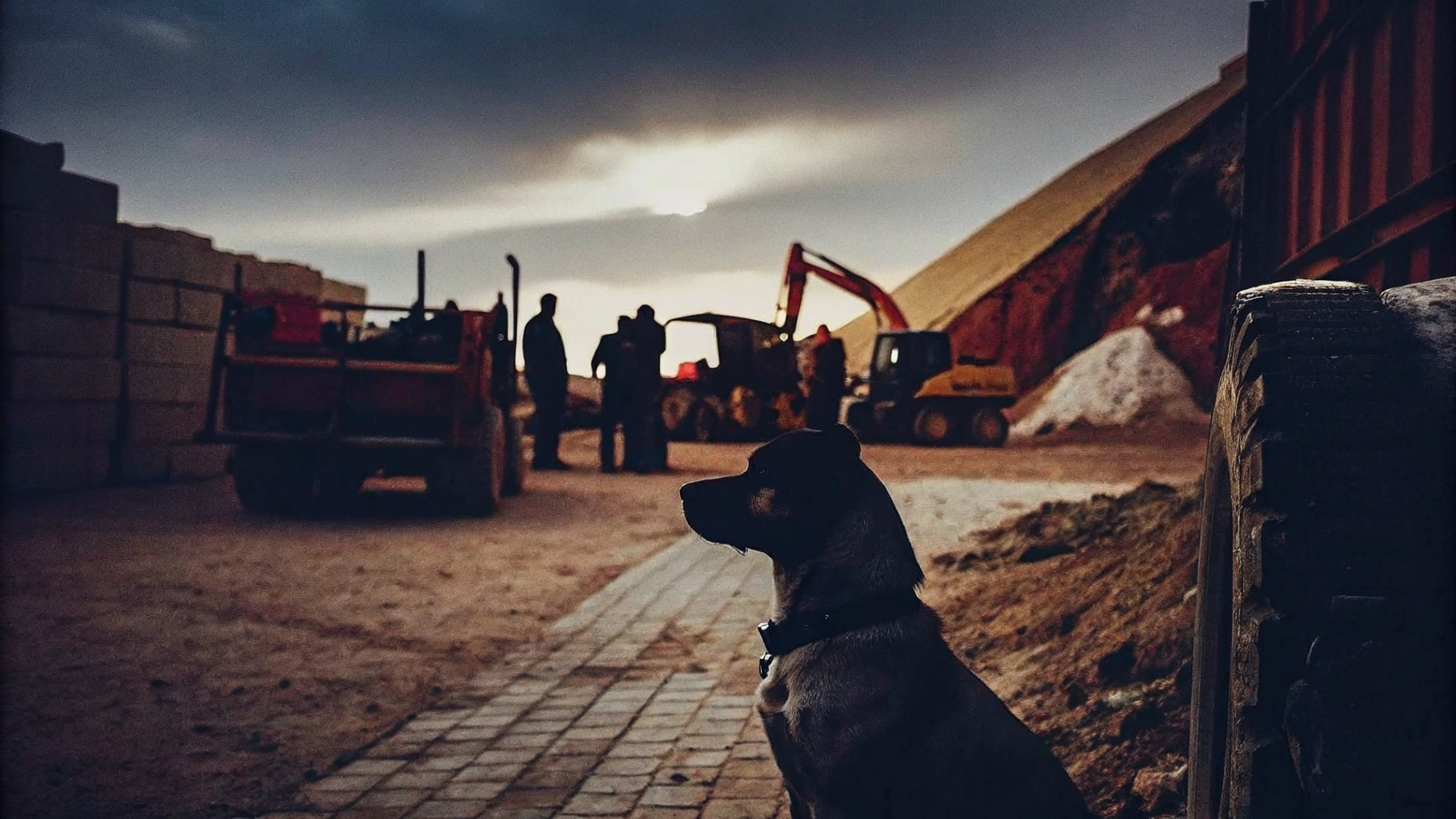
Security dogs perform several distinct functions on a construction site beyond simple deterrence: patrolling the perimeter, monitoring access points, and supporting crowd management during high-footfall periods such as deliveries or shift changes. This versatility is what makes canine units useful across very different site types, from a live construction programme to a completed but unoccupied development awaiting handover.
Specialist detection training — for explosives or narcotics, for example — is relevant mainly to higher-risk environments and is not standard on most UK construction sites, but it illustrates the range of capability within canine security more broadly. For most construction and vacant property deployments, the core value is a combination of visible deterrence, access point monitoring, and hazard detection working together, which contributes to improved morale and productivity for the workers and visitors who share the site day to day.
Legal Compliance: Understanding Regulations for Security Dogs on Construction Sites
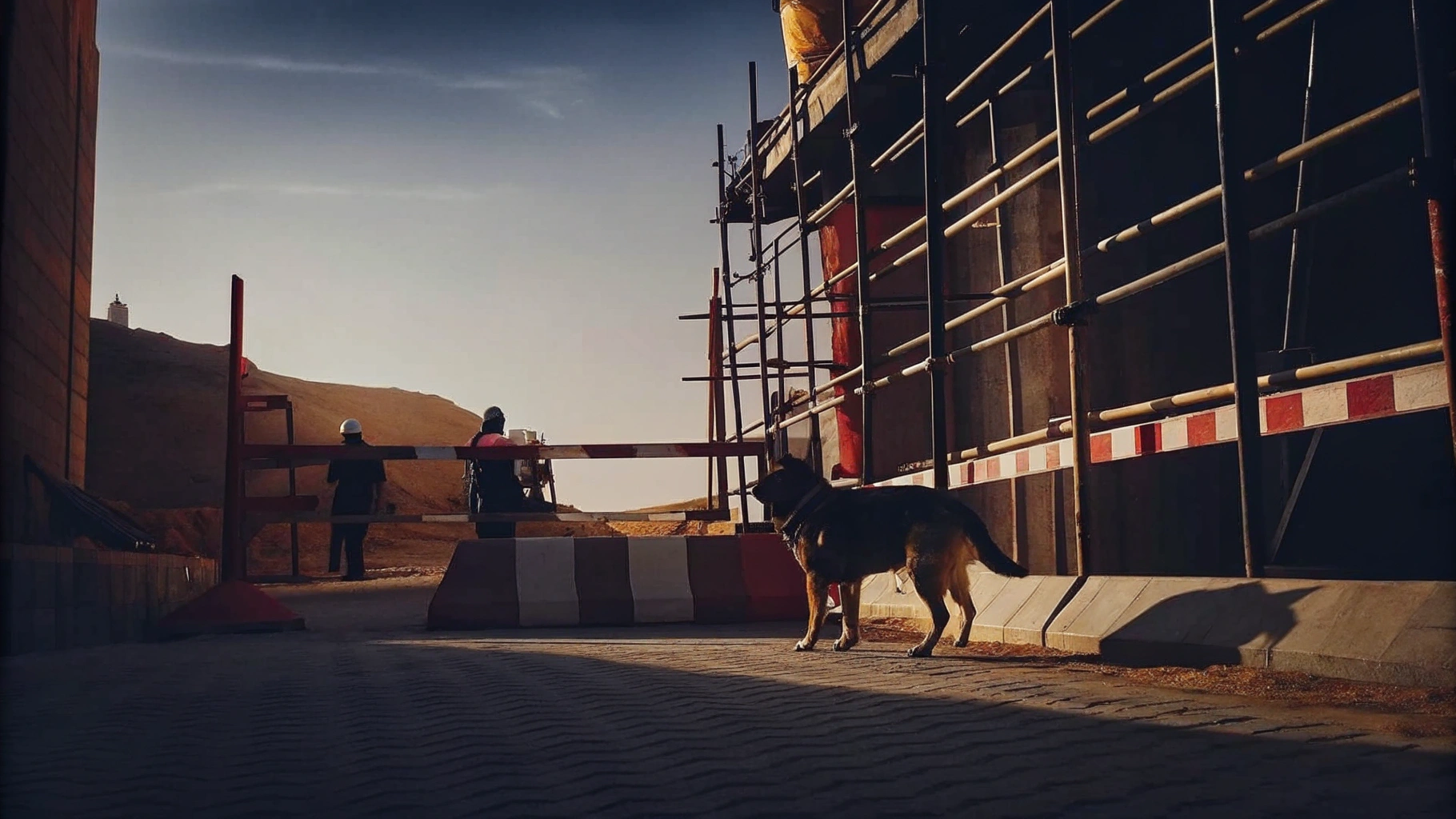
Deploying a security dog on a UK construction site is governed primarily by the Guard Dogs Act 1975, which requires that a qualified handler be present and in control of the dog at all times it is on patrol, and that the dog does not roam the site unsupervised. A visible warning notice indicating the presence of a guard dog must also be displayed, both as a legal requirement and as an additional deterrent in its own right.
Non-compliance with the Guard Dogs Act 1975 can result in substantial penalties, including fines for breaches of the handler-control requirement. Separately, under the Dangerous Dogs Act 1991, if a dog causes injury as a result of a handler's negligence, the consequences can extend to a maximum of two years' imprisonment plus additional fines. Together these two pieces of legislation form the legal minefield that security industry commentators, including trade publication Building, warn organisations to navigate carefully to avoid both civil and criminal liability.
Integrating well-trained security dogs into a site's protection plan, with a properly licensed handler in place at all times, demonstrates compliance with these legal requirements as well as good practice. During the development of a luxury hotel on Sloane Street, Priority First provided canine services that helped manage contractor access and protect the site, illustrating how canine deployment fits within a compliant, documented security operation. Site managers who understand and adhere to the Guard Dogs Act 1975 and the Dangerous Dogs Act 1991 put themselves in a stronger position, both legally and operationally.
Cost-Effectiveness: The Financial Benefits of Security Dogs Over Traditional Security
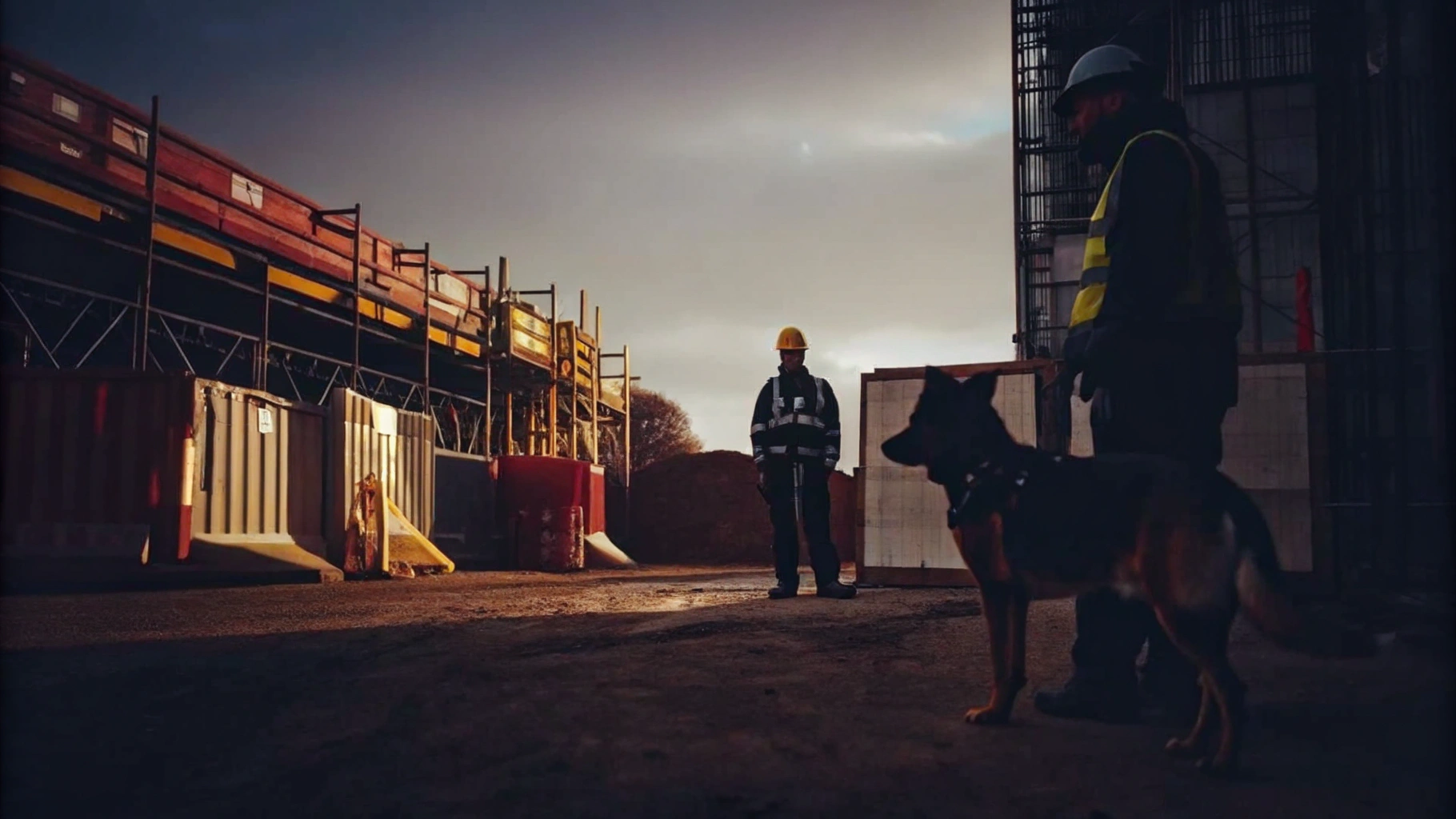
A trained security dog can, in many deployments, cover ground that would otherwise require multiple static guards, reducing labour costs while maintaining strong coverage across a large or complex site. The presence of a canine unit is intended to reduce theft and vandalism incidents, which in turn can translate into lower insurance premiums, since insurers often view sites with visible guard dog measures as lower risk — though this is worth confirming directly with your insurer rather than assumed.
Dogs' acute senses — hearing roughly four times more sensitive than a human's and a sense of smell many times more accurate — are what allow a canine unit to patrol large areas more efficiently than an equivalent number of static human guards covering the same ground.
The effectiveness of any canine deployment depends heavily on handler expertise: a well-trained handler ensures the dog is deployed appropriately for the site's specific risk profile. Construction project managers weighing up canine security as part of a wider protection strategy should also review Priority First's approach to manned guarding services, since the strongest results generally come from combining canine units with trained officers and CCTV rather than relying on any single measure alone.

Technology Integration: Combining CCTV and Monitoring with Security Dogs for Site Protection
Pairing CCTV monitoring with a canine unit gives site managers both a physical deterrent and a documented visual record of activity on-site, strengthening the overall security posture beyond what either measure achieves alone. Priority First's approach to physical protection combines trained handlers and dogs with CCTV monitoring and, where relevant, routine site audits and reporting, so that a canine deployment sits within a documented, auditable security operation rather than an isolated measure.
CCTV monitoring can help direct a handler's attention to specific areas of a large site, improving how efficiently a canine patrol covers ground across a busy or multi-zone construction programme. This combination — visible canine deterrence plus recorded CCTV coverage — is designed to make it harder for an intruder to access a site undetected and to give a site manager a clear evidential record if an incident does occur.
Investing in this kind of combined security measure is intended to protect assets in the moment while also supporting longer-term business resilience: the reasoning across the industry is consistent that early investment in layered security measures tends to prevent larger losses later in a project's lifecycle.
Operational Efficiency: How Security Dogs Contribute to Timely Project Completion
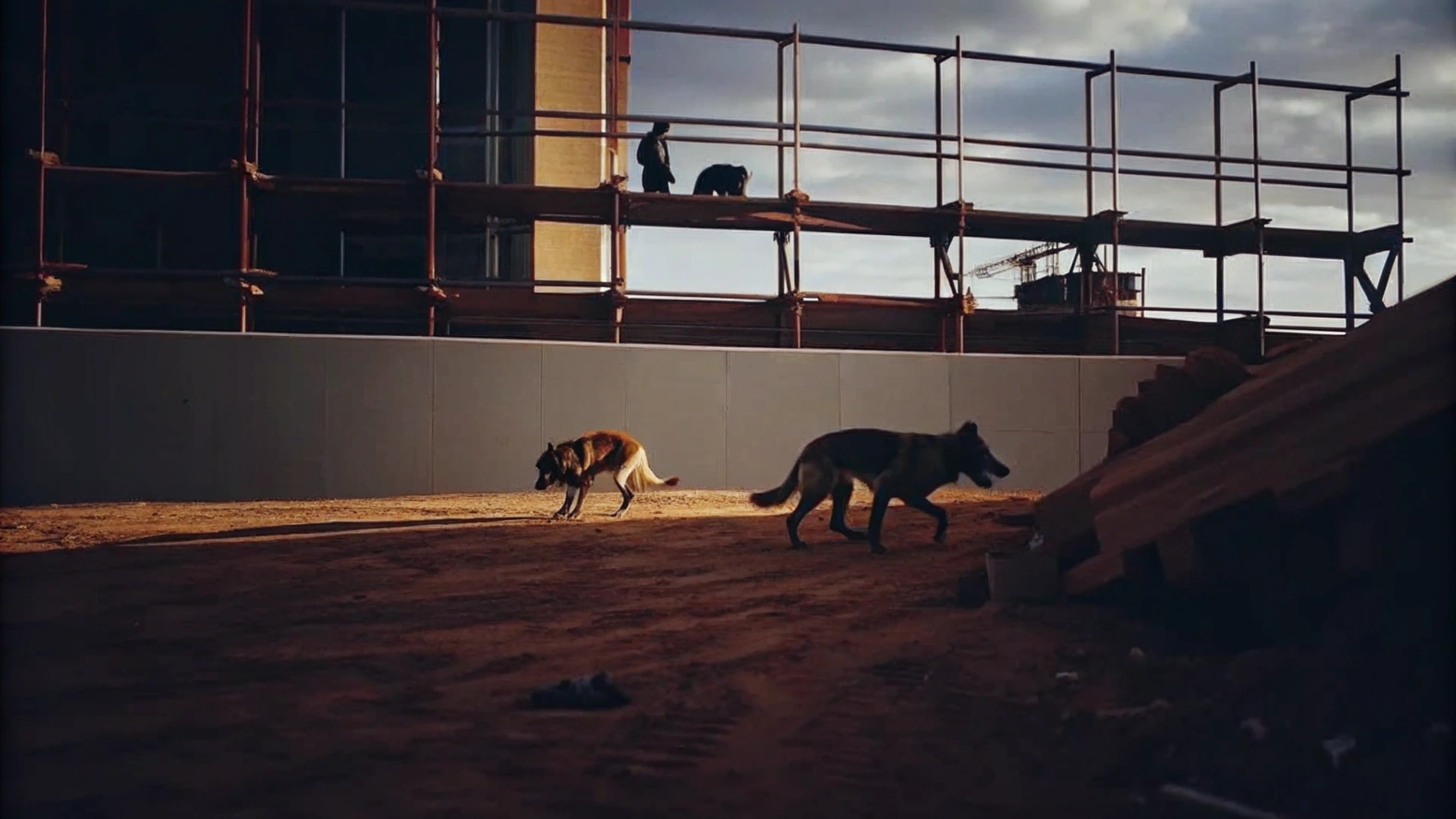
Security dogs support operational efficiency on a construction site by reducing the disruptions that theft and vandalism typically cause to a project timeline. A site with a visible canine deterrent tends to experience fewer security-related interruptions, which in turn supports more predictable progress against the programme. On the upscale hotel development in Chelsea referenced earlier, the combination of canine units and manned guarding was associated with the project staying closer to schedule than it might otherwise have done.
Canine units also support access control procedures, helping authorised personnel move through site gates more quickly during busy periods such as shift changes or deliveries. This contributes to smoother day-to-day workflows and can reduce instances of avoidable downtime caused by access bottlenecks or security incidents.
A single dog-and-handler team is often described in the security industry as a "force multiplier," with one team able to cover ground equivalent to roughly four non-canine patrols. Given that hiring protective staff typically costs in the range of £30 to £95 per hour, and that the average assessed value of machinery stolen from UK construction sites has been reported to exceed £29,000 per incident, the financial case for a properly deployed canine unit is straightforward to make against the potential cost of a single theft.
Strategic deployment of security dogs, combined with CCTV monitoring and manned guarding, supports both safety and project timelines. Priority First's approach to construction and logistics management on-site reflects this same layered principle: no single measure is treated as sufficient on its own.

Your construction site canine security checklist
- Confirm your provider's handlers are individually SIA-licensed — a legal requirement for security operatives in the UK.
- Check the dog and handler are compliant with the Guard Dogs Act 1975, including displayed warning signage and continuous handler control.
- Ask how the canine unit will be combined with existing manned guarding, CCTV monitoring and access control rather than used as a stand-alone measure.
- Establish a clear incident-response protocol for what happens if the dog detects an intruder or a hazard (gas leak, unstable structure).
- Review your insurance policy to confirm whether canine security measures affect your premium, rather than assuming a reduction automatically applies.
- Request evidence of the handler's experience and the dog's training standard before signing a contract.
- Set a review point after the first few weeks of deployment to confirm the unit is delivering the deterrence and coverage your site needs.
Conclusion
Integrating security dogs into construction site operations is a practical strategy for enhancing both safety and efficiency when combined with manned guarding, CCTV, and proper access control. Trained canine units help deter theft, monitor hazards, and support a more secure working environment that lets construction teams focus on delivery rather than constant risk-monitoring. The presence of a well-managed canine unit protects valuable assets while contributing to worker confidence on-site.
The core benefits are consistent across the evidence covered here: sites using guard dogs report roughly 25% fewer break-ins, canine units can detect hazards a human patrol might miss, and a single dog-and-handler team can cover ground equivalent to four non-canine patrols. The cost-effectiveness of canine security is clearest when it is deployed as part of a layered approach — alongside skilled handlers, CCTV, and manned guarding — rather than as an isolated measure.
In practice, strategic canine deployment strengthens both safety measures and overall project dynamics on a construction site. Site managers considering this option should weigh it against their site's specific risk profile and legal obligations under the Guard Dogs Act 1975 and the Dangerous Dogs Act 1991, and treat it as one part of a wider, properly documented security plan.
How Priority First supports construction sites with canine and wider security
Construction sites carry constant exposure to theft, vandalism, and access-control failures — the exact risks a properly deployed canine unit, backed by manned guarding and CCTV, is designed to reduce. Priority First delivers canine services as one of ten core service lines, alongside manned security, keyholding, alarmed response, street patrol, CCTV monitoring, logistics management, facilities management and concierge, across prime central London (Chelsea, Knightsbridge, Mayfair), West London, and contracts extending into the West Midlands and Bedfordshire.
As one proof point of how Priority First evidences its security operations: on one mixed-use development the company brought photographed checkpoint completions from zero to 152, moving from 0% to 100% of checkpoints carrying a watermarked, timestamped photo — replacing a security log that was previously unprovable with one that shows exactly where and when each patrol occurred.
If you manage a construction site, vacant property, or mixed-use development and want to discuss whether a canine unit or a wider integrated security plan fits your risk profile, get in touch with Priority First for a quote.
Frequently Asked Questions
What services does Priority First Security Services provide for construction sites? Priority First provides canine security, manned guarding, CCTV monitoring, access control, and logistics management as an integrated offering for construction sites. These services are typically combined rather than deployed in isolation, giving site managers a single accountable provider across security and facilities management.
How do security dogs enhance safety on construction sites? Security dogs enhance site safety by identifying intruders, detecting hazards such as gas leaks or unstable ground, and acting as a visible deterrent against theft and vandalism. Their presence supports compliance with health and safety standards and helps projects proceed with fewer disruptions.
What are the benefits of using security dogs compared to traditional security measures? A single canine patrol team can be as effective as four non-canine patrols, providing wider coverage per team than static human guards alone. Sites using guard dogs report approximately 25% fewer break-ins compared to sites without them, according to canine security industry data.
How do security dogs contribute to a safer working environment? A skilled handler paired with a trained dog supports faster threat detection, letting managers and workers focus on their tasks with fewer safety concerns. This pairing also tends to build a stronger day-to-day safety culture among on-site personnel.
What hazards can security dogs help identify on construction sites? Security dogs are trained to detect hazards such as unstable structures, hazardous materials, gas leaks, and unstable ground conditions that may not be immediately obvious to a human patrol. Early detection of these hazards can prevent injuries before an incident occurs.
What is the financial rationale for employing security dogs on construction sites? A single dog-and-handler team can cover ground equivalent to several static guards, reducing labour costs while maintaining strong site coverage. Given that stolen construction machinery has been reported to average over £29,000 per incident, the potential savings from preventing even one theft can outweigh the cost of a canine unit.
Is a security dog legally required to have a licensed handler on a UK construction site? Yes. The Guard Dogs Act 1975 requires that a qualified handler be present and in control of the dog at all times it is deployed on-site, and that a warning notice is displayed. Failure to comply can result in fines, and under the Dangerous Dogs Act 1991, a handler's negligence causing injury can lead to imprisonment.