Build a Security Centre: Best Practices for Construction Sites

Introduction
The construction industry is grappling with a significant challenge: theft and unauthorised access are costing businesses over £1 million weekly in the UK. This stark reality underscores the need for a robust security centre, which is not merely a precaution but a necessity to protect valuable assets and ensure project continuity.
Ignoring this risk can have dire consequences. Financial losses are just the tip of the iceberg; operational disruptions and reputational damage can follow, jeopardising future projects and partnerships. The lesson is clear: security is not an expense; it is essential for business continuity.
In practise, construction sites must adapt their security measures to keep pace with evolving threats. This article explores best practises for establishing a security centre, focusing on:
- Risk assessment
- Technology integration
- Personnel training
- The importance of continuous evaluation
Priority First stands ready to provide pragmatic solutions, ensuring that businesses can safeguard their operations effectively. Early investment in security can prevent far greater losses down the line.
Assess Security Needs and Risks in Construction Sites
Conducting a comprehensive security centre needs assessment reveals critical challenges in the construction sector. In the UK, the urgent need for effective security measures is highlighted by the fact that construction theft costs businesses over £1 million a week, which underscores the importance of a security centre.
This reality underscores the importance of a thorough location assessment. A detailed evaluation of the building's layout, access points, and surrounding environment is essential. Poorly lit areas or those that are easily accessible can pose significant risks to the security centre. For instance, the establishment of a security centre at construction sites, which often feature multiple entry and exit points, can help complicate oversight and reduce vulnerability to unauthorised access.
Next, risk identification is crucial. Tools like SWOT analysis (Strengths, Weaknesses, Opportunities, Threats) can help pinpoint specific vulnerabilities. Common risks include theft of equipment and unauthorised access, with the construction sector facing over 11,000 cases of equipment theft annually, costing the industry more than £1 billion. Ignoring these risks can lead the security centre to face severe financial and operational consequences.
Engaging stakeholders is another vital step. Consulting with project managers, workers, and safety staff provides insights into perceived risks and past incidents. Their firsthand experiences can illuminate areas needing attention, fostering a more comprehensive understanding of site vulnerabilities and the effectiveness of current protective measures.
Documentation plays a key role in this process. Maintaining detailed records of identified risks and vulnerabilities serves as a reference for developing tailored protection strategies. Efficient documentation aids in monitoring incidents and assessing the effectiveness of implemented measures over time.
Security needs are not static; they evolve at the security centre as projects progress. Regular updates and evaluations are necessary to adapt to new risks that may arise during various stages of development. For example, seasonal influences, particularly in summer, can elevate criminal behaviour, necessitating a reassessment of safety measures.
By systematically evaluating safety requirements and threats, construction projects can implement focused strategies that enhance overall protection and safety in the security centre. This proactive approach not only safeguards valuable resources but also ensures project continuity, reinforcing the notion that early investment in security prevents greater losses later.
Incorporate Advanced Technology for Enhanced Security
To enhance security centre on construction sites, integrating advanced technologies is essential.
CCTV Systems: High-definition cameras with night vision capabilities provide continuous monitoring of site activities. These systems can detect suspicious activity in real-time, triggering immediate alerts to the security centre personnel. A recent case study involving a multi-use complex in Chelsea, London, demonstrated that Priority First's CCTV monitoring system contributed to zero incidents of break-ins within weeks of installation. This showcases its effectiveness in deterring crime.
Access Control Systems: Electronic access control measures, such as keycard systems or biometric scanners, restrict entry to authorised personnel only. This significantly reduces the risk of unauthorised access to the security centre, ensuring that only vetted individuals can enter sensitive areas.
AI-Powered Surveillance: Intelligent CCTV systems equipped with automated threat detection and behavioural analysis software can identify unusual patterns, such as loitering or unauthorised movements. These tools notify response teams in real-time, enhancing protective measures. AI monitoring technology has proven effective in decreasing nighttime trespassing occurrences, highlighting the importance of proactive measures taken by the security centre.
Predictive Risk Modelling: Employing predictive analytics allows businesses to anticipate potential vulnerabilities based on historical data and site-specific factors. This proactive approach enables timely interventions at the security centre before incidents occur, safeguarding assets and ensuring compliance with safety regulations.
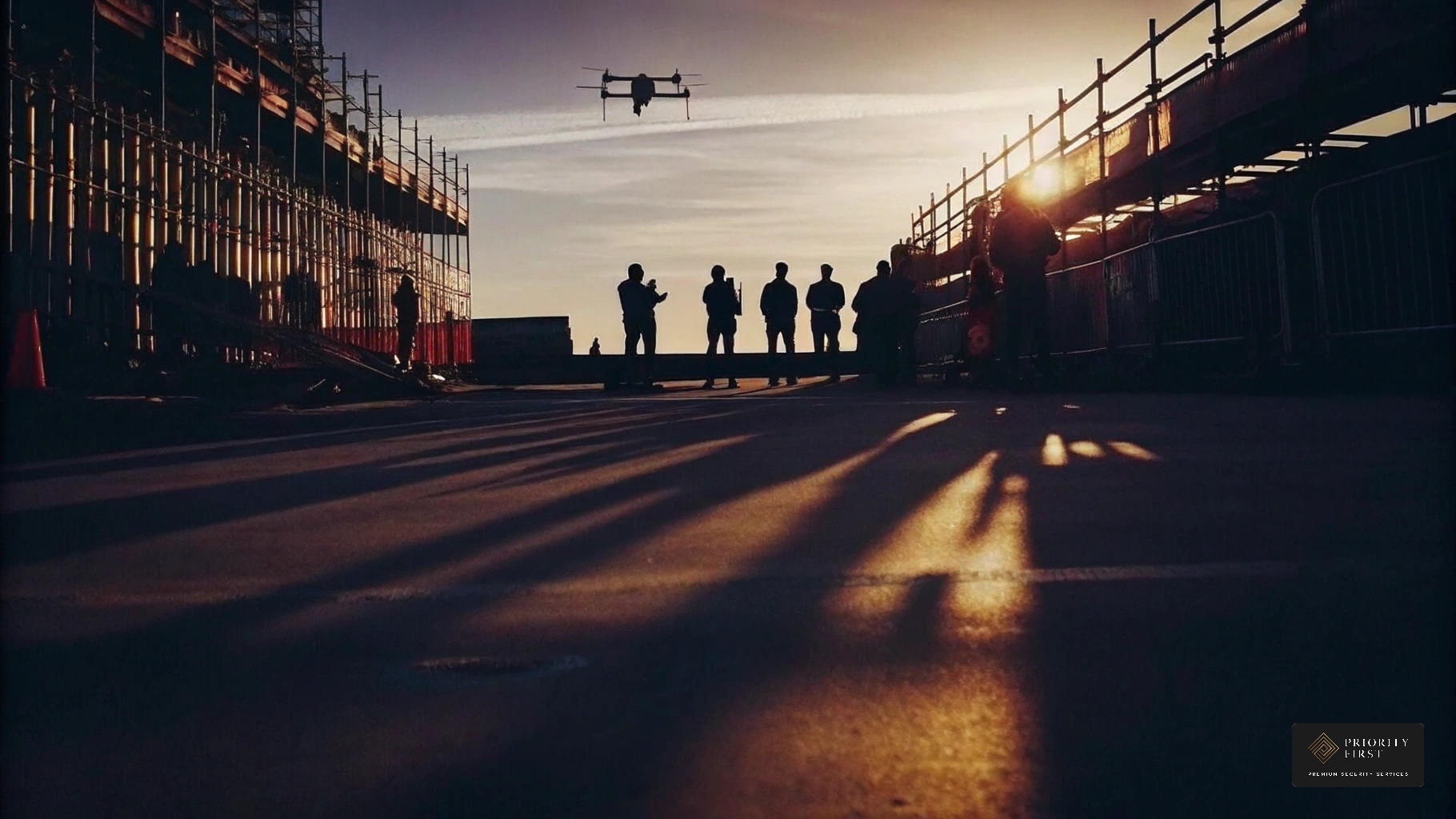
Mobile Patrols and Drones: Incorporating drones for aerial surveillance and mobile patrols efficiently covers larger areas. Drones provide real-time footage, enhancing situational awareness and enabling rapid responses to potential threats.
By combining these technologies with Priority First's customised protection solutions, such as key holding and alarm response services, construction sites can create a comprehensive protective framework. This not only deters crime but also improves operational efficiency, ultimately safeguarding valuable assets and ensuring project continuity.
Train Personnel and Establish Clear Security Protocols
Effective training and well-defined protocols are essential for maintaining a security centre on construction sites.
Protection Training Programs: Comprehensive training programmes for all personnel are vital, focusing on awareness, emergency response, and the proper use of protective equipment. Regular training sessions keep staff informed about the latest best practises and technologies. Allocating just 2.5% of project expenses towards safety training can lead to profit increases of 4 to 7% per project, highlighting the financial benefits of prioritising protective training.
Event Reporting Procedures: Clear protocols for reporting safety occurrences, such as theft, vandalism, or safety violations, must be established. All staff should be trained to report incidents quickly and accurately, ensuring that no breach goes unaddressed. Understanding the mandatory occurrence notice submission process is also crucial, as it requires reporting incidents that pose risks of serious injury or death.
Access Control Training: Staff should receive training on access control measures, emphasising the verification of identification and management of entry points. This training should stress the importance of limiting access to authorised individuals only, thereby reducing potential risks.
Emergency Response Drills: Regular exercises are necessary to prepare staff for potential breaches or emergencies. These drills should simulate various scenarios, allowing personnel to practise their responses in a controlled environment, enhancing their readiness and confidence.
Feedback Mechanism: A feedback system should be established to encourage staff to share their experiences and recommendations regarding safety protocols. This promotes a culture of alertness and continuous improvement, ensuring that protective measures adapt to real-world challenges. Grace Ellis points out that inadequate training puts individual employees, teams, and the organisation at risk, underscoring the need for ongoing training and protocol refinement.
By investing in personnel development and establishing clear procedures, construction sites can significantly enhance their defensive posture through the security centre, ensuring that all team members are well-equipped to respond effectively to potential dangers. Integrating these practises not only safeguards employees but also boosts the overall success and profitability of building projects.
Evaluate and Adapt Security Measures Regularly
To maintain the effectiveness of security measures at the security centre on construction sites, regular evaluation and adaptation of strategies are essential in response to evolving threats and incidents.
-
Conduct Safety Audits: Routine evaluations are crucial to assess the effectiveness of existing measures. These audits should encompass physical protection, personnel training, and the integration of advanced technologies. This ensures that all aspects of site safety remain robust and current, much like Priority First’s extensive building audits and risk evaluations.
-
Review Event Reports: Systematic analysis of event reports helps identify patterns or recurring issues. Understanding the characteristics and frequency of past incidents can guide necessary modifications to protective measures and training programmes, ultimately enhancing overall safety. For instance, Priority First’s management of alarm incidents and fire emergencies underscores the importance of learning from previous challenges.
-
Stay Informed on Threats: Vigilance regarding emerging threats and trends within the construction industry is vital. This proactive stance allows for prompt adjustments to protective measures, addressing new challenges effectively, as demonstrated by Priority First’s strategies during complex projects.
-
Engage with Protection Specialists: Collaborating with safety professionals provides insights into best practises and innovative solutions. Priority First’s team of experts offers valuable perspectives on enhancing site protection, drawing from their extensive experience across various environments, including corporate and residential settings.
-
Feedback Loop: Establishing a feedback loop enables personnel to share observations and suggestions for improvement. This collaborative approach fosters a culture of continuous enhancement, ensuring that protective measures evolve in line with operational needs and emerging threats, reflecting Priority First’s commitment to tailoring solutions based on client input.
By consistently evaluating and adapting security measures, construction sites can adopt a proactive stance against potential threats, effectively safeguarding both personnel and assets, much like the success achieved by Priority First at their security centre across numerous projects.
Conclusion
Establishing a robust security centre at construction sites is essential for protecting valuable assets and ensuring project continuity. The reality is that comprehensive security measures - such as risk assessments, advanced technology, and personnel training - can significantly reduce vulnerabilities and enhance overall safety. By investing proactively in security, construction companies not only safeguard their resources but also mitigate potential financial losses, underscoring the necessity of a well-planned security strategy.
Key insights reveal the importance of:
- Assessing security needs
- Integrating advanced technologies like CCTV and access control systems
- Establishing clear protocols for personnel training
Engaging stakeholders and maintaining thorough documentation are crucial for identifying risks and adapting security measures as projects evolve. Regular evaluations and feedback mechanisms ensure that protective strategies remain effective against changing threats.
The lesson is clear: prioritising security in construction protects individuals and assets while contributing to the success and profitability of projects. Embracing best practises and innovative solutions can transform construction sites into secure environments, fostering a culture of safety and vigilance that benefits all stakeholders involved. Taking action now to implement these strategies will yield long-term benefits, ensuring that construction sites are prepared to face any challenges that may arise.
Frequently Asked Questions
Why is assessing security needs important in construction sites?
Assessing security needs is crucial because construction theft costs businesses over £1 million a week in the UK, highlighting the need for effective security measures.
What factors should be evaluated during a location assessment for security?
A detailed evaluation should include the building's layout, access points, and the surrounding environment, as poorly lit areas or easily accessible points can pose significant security risks.
How can a security centre help in construction sites?
Establishing a security centre can help manage multiple entry and exit points, complicating oversight and reducing the risk of unauthorized access.
What is the role of risk identification in security assessments?
Risk identification helps pinpoint specific vulnerabilities using tools like SWOT analysis, which can reveal common risks such as theft of equipment and unauthorized access.
What statistics highlight the risks faced by the construction sector?
The construction sector experiences over 11,000 cases of equipment theft annually, costing more than £1 billion.
Why is engaging stakeholders important in assessing security needs?
Consulting with project managers, workers, and safety staff provides insights into perceived risks and past incidents, which helps illuminate vulnerabilities and the effectiveness of current protective measures.
How does documentation contribute to security assessments?
Maintaining detailed records of identified risks and vulnerabilities serves as a reference for developing tailored protection strategies and aids in monitoring incidents and evaluating the effectiveness of measures over time.
How do security needs change over time at construction sites?
Security needs evolve as projects progress, necessitating regular updates and evaluations to adapt to new risks that may arise, particularly during different seasons.
What is the benefit of a proactive approach to security in construction projects?
A proactive approach enhances overall protection and safety, safeguards valuable resources, and ensures project continuity, reinforcing the idea that early investment in security can prevent greater losses later.