Compare the Biggest Security Companies for Construction Needs

Introduction
The construction industry is facing significant security challenges, with theft rates rising and technological advancements reshaping the landscape. This reality underscores the importance of robust security measures, as firms like G4S, Securitas, and Priority First integrate innovative solutions to protect assets. For project managers, the task of selecting the right security partner is crucial to safeguarding their investments effectively.
Ignoring these security risks can have dire consequences. Financial losses from theft can escalate quickly, impacting not just the bottom line but also operational efficiency and reputation. The lesson is clear: businesses must prioritise security to mitigate these risks and ensure continuity.
In practise, Priority First stands out as a pragmatic solution. With over £1.6 billion in assets secured and a commitment to rapid response times, they offer a client-focused approach that addresses the unique vulnerabilities of construction sites. By investing in reliable security now, businesses can prevent greater losses in the future.
Overview of the Security Industry Landscape in 2025
In 2025, the UK safety sector is witnessing notable growth, propelled by rapid technological advancements and a rising demand for specialised services, particularly in the building industry. The biggest security companies, including prominent firms like G4S, Securitas, and Priority First, are leading this evolution by integrating AI-driven tools and advanced surveillance technologies to enhance protective measures. The emergence of intelligent building methods has shifted the focus towards solutions that not only protect physical assets but also ensure compliance with stringent safety regulations.
The reality is that the sector faces significant challenges, including a skilled labour shortage. By 2027, around 225,000 new workers will be needed in the building trades to meet escalating demands. This shortage, coupled with emerging threats, underscores the necessity for a proactive management strategy. Businesses are increasingly prioritising tailored solutions that address specific vulnerabilities at building sites, such as theft, vandalism, and health and safety compliance.
Technological advancements are reshaping building safety trends in 2025. For instance, AI-driven surveillance systems now offer real-time threat detection, significantly reducing false alarms and enhancing overall safety. Case studies illustrate the effectiveness of these systems; AI surveillance cameras can distinguish between humans and animals, providing alerts only when necessary, thereby improving response times to genuine threats.
Moreover, the integration of IoT devices and cloud-based monitoring systems allows project managers to oversee multiple job sites from a single dashboard, boosting operational efficiency and safety oversight. As the landscape of building protection evolves, it is crucial for companies to partner with the biggest security companies that are capable of navigating this complex environment effectively, ensuring both safety and compliance.
In practice, early investment in security measures can prevent greater losses down the line. Security is not merely an expense; it is an essential component of business continuity.
Key Criteria for Choosing a Security Partner in Construction
Choosing the right partner for building projects is crucial for safeguarding assets and ensuring smooth operations. The reality is that security challenges in the construction sector are often underestimated, yet they can have significant financial and operational implications. Here are key criteria to consider:
-
Experience and Specialisation: Opt for firms with a solid track record in building protection. Their understanding of the unique risks associated with construction sites-like theft, vandalism, and compliance issues-will prove invaluable.
-
Technological Capabilities: Assess the protective technologies at their disposal, such as AI-driven surveillance, advanced access control systems, and real-time monitoring solutions. These tools enhance situational awareness and response times, making them essential for effective site protection.
-
Accreditations and Compliance: Ensure that the provider possesses the necessary certifications, such as SIA Approved Contractor status. This guarantees adherence to industry standards and best practises, which is vital for maintaining safety and protection on-site.
-
Customization and Flexibility: A reliable partner should offer tailored services that meet the specific needs of your project. This adaptability can significantly enhance the effectiveness of protective measures.
-
Client Testimonials and Reputation: Investigate feedback from previous clients to gauge the provider's reliability and effectiveness. Positive testimonials can indicate a strong history of partnerships and successful outcomes.
In practise, prioritising these criteria allows project managers to make informed decisions that bolster the safety and protection of their sites. This proactive approach ultimately leads to more successful project completions, reinforcing the importance of early investment in security measures.
Comparative Analysis of Leading Security Companies for Construction
In the competitive landscape of construction security, the need for robust protection provided by the biggest security companies is more pressing than ever. Recent statistics reveal that construction theft costs UK businesses over £1 million a week, highlighting a critical yet often underestimated business function.
This reality underscores the importance of prioritising security measures within construction projects. Ignoring these risks can lead to significant financial losses, operational disruptions, and reputational damage. As the industry faces rising protection challenges, the implications of inadequate security become increasingly severe.
Priority First Security Services emerges as a pragmatic solution in this context. Known for its customised solutions and sophisticated AI-driven tools, Priority First excels in delivering extensive protection for building locations. Their robust on-site teams, equipped with intelligent monitoring systems, ensure effective protection against theft, vandalism, and compliance issues. With a 100% customer satisfaction rate and a proven history of safeguarding assets worth over £1.6 billion, Priority First positions itself as a reliable ally for project managers.
While the biggest security companies like G4S and Securitas offer valuable services, they may lack the specialised focus that smaller firms can provide. G4S, recognised as one of the biggest security companies and a global leader in protective services, offers extensive resources but may not tailor its solutions as effectively to specific construction needs. Securitas, recognised as one of the biggest security companies, integrates smart surveillance solutions with a strong emphasis on technology, but may not address the unique challenges of every building project.
Mitie and Wilson James also contribute to the sector, with Mitie merging traditional guarding with advanced technology for large-scale projects, and Wilson James specialising in logistics and safety. However, the unique strengths of Priority First, particularly its commitment to customised protection solutions and integrated logistics services, ensure that operations proceed seamlessly while upholding high safety standards.
In conclusion, as businesses navigate the complexities of construction security, early investment in tailored solutions like those offered by Priority First is essential. By prioritising security, companies can safeguard their assets and ensure project continuity, ultimately reinforcing their resilience in a challenging economic landscape.
Innovative Technologies Enhancing Construction Site Security
The integration of innovative technologies is reshaping construction site security, with several key advancements leading the way:
-
AI-Powered Surveillance: Intelligent CCTV systems equipped with automated threat detection capabilities enable real-time monitoring and rapid incident response. These systems can reduce false alarms by up to 70%, enhancing overall efficiency.
-
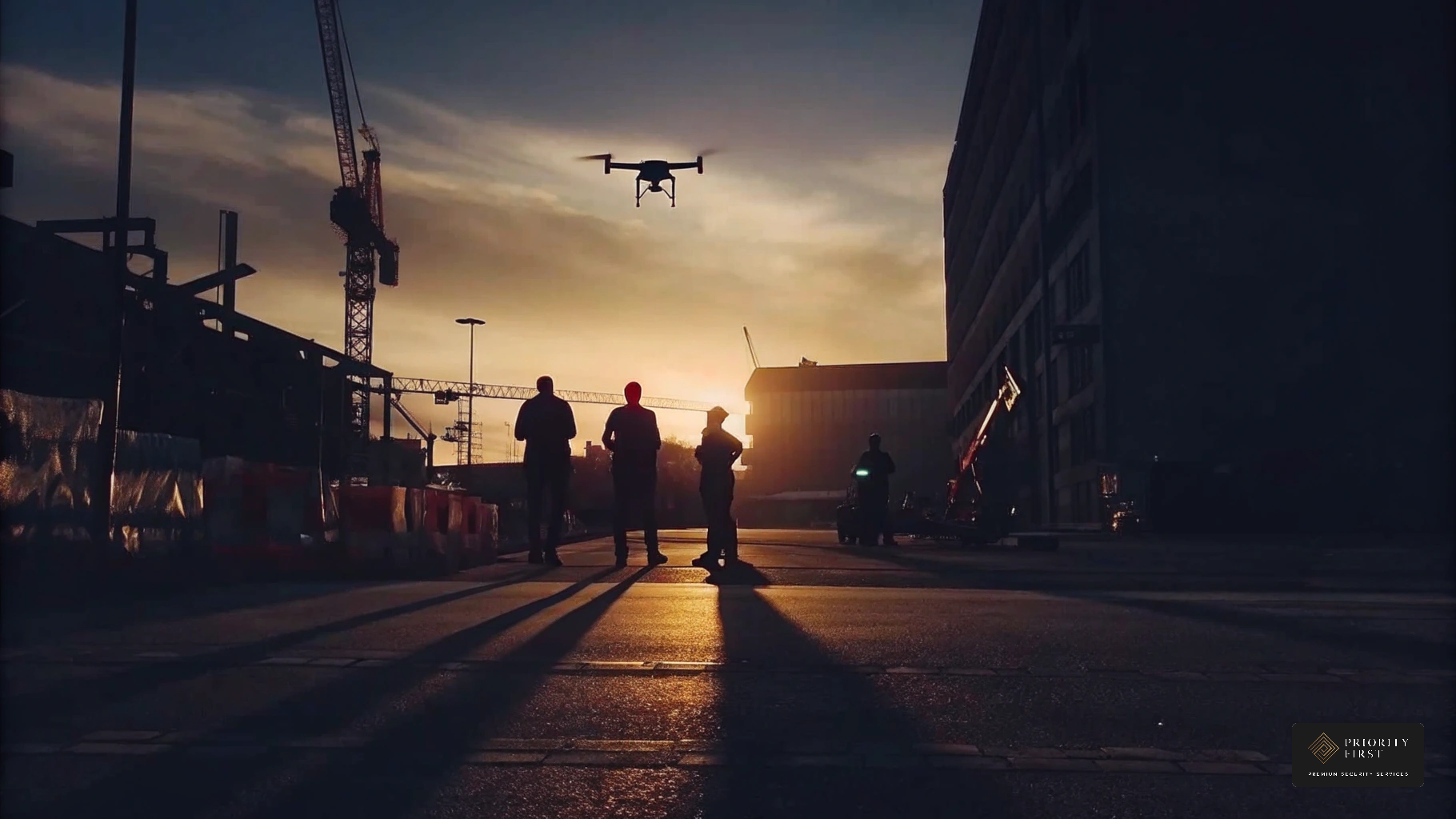
Unmanned aerial vehicles are increasingly employed for aerial monitoring, providing thorough area overviews that assist in detecting possible threats and surveying large regions effectively. Their capability to deliver real-time information and high-resolution visuals renders them essential for proactive risk management.
-
Access Control Systems: Advanced biometric and RFID systems ensure that only authorised personnel can access construction sites, significantly mitigating the risks of theft and vandalism. These systems can be integrated with mobile applications for real-time monitoring and management.
-
Predictive Analytics: By examining past data, predictive models can pinpoint possible vulnerabilities, enabling teams to adopt proactive measures. This data-focused method not only improves protection but also aids in adhering to regulatory standards.
-
Mobile Protection Applications: These applications enable personnel to receive real-time alerts and manage incidents directly from their mobile devices, significantly enhancing response times and operational efficiency.
-
Hostile Vehicle Mitigation (HVM): Understanding HVM is crucial for building locations, as it entails applying physical measures to inhibit vehicles from being utilised as weapons. This includes the strategic placement of barriers and bollards to protect against potential threats. At Priority First, we highlight HVM as a component of a multi-tiered protection approach, ensuring that building environments stay accessible yet protected.
Embracing these technologies not only enhances security outcomes but also contributes to overall project efficiency and safety, ensuring that construction sites remain secure and compliant in an increasingly complex environment.
Conclusion
The construction landscape is evolving, and the need for effective security partnerships is more critical than ever. With theft and vandalism costing UK businesses over £1 million a week, the integration of advanced technologies and tailored solutions from reputable security firms is essential for safeguarding assets and ensuring compliance with industry regulations. Ignoring these risks can lead to significant financial losses, making robust security measures a necessity for successful project management.
When selecting a security partner, businesses must consider key factors such as:
- Experience
- Technological capabilities
- The ability to customise services
Companies like Priority First exemplify the value of specialised services that address unique construction challenges. In contrast, larger firms like G4S and Securitas may not always provide the same level of tailored support. The discussion around innovative technologies, including AI-powered surveillance and predictive analytics, underscores how modern solutions can enhance safety and operational efficiency on construction sites.
The reality is that as the construction industry faces increasing security challenges, prioritising safety is paramount. Embracing the latest advancements and collaborating with reputable security providers not only protects physical assets but also contributes to the overall resilience of projects in a competitive environment. By taking proactive steps today, businesses can ensure that their construction operations thrive, laying a solid foundation for success in the years to come.
Frequently Asked Questions
What is driving the growth of the UK safety sector in 2025?
The growth is driven by rapid technological advancements and a rising demand for specialised services, particularly in the building industry.
Which companies are leading the evolution of the security industry?
Prominent companies leading the evolution include G4S, Securitas, and Priority First.
How are security companies enhancing protective measures in 2025?
They are integrating AI-driven tools and advanced surveillance technologies to enhance protective measures.
What challenges does the security sector face in 2025?
The sector faces significant challenges, including a skilled labour shortage, with an estimated need for 225,000 new workers in the building trades by 2027.
What specific vulnerabilities are businesses addressing in building sites?
Businesses are prioritising tailored solutions to address vulnerabilities such as theft, vandalism, and health and safety compliance.
How are technological advancements reshaping building safety trends?
AI-driven surveillance systems provide real-time threat detection, reduce false alarms, and improve overall safety.
Can you provide an example of how AI surveillance systems improve safety?
AI surveillance cameras can distinguish between humans and animals, sending alerts only when necessary, which improves response times to genuine threats.
What role do IoT devices and cloud-based monitoring systems play in building safety?
They allow project managers to oversee multiple job sites from a single dashboard, boosting operational efficiency and safety oversight.
Why is early investment in security measures important for businesses?
Early investment can prevent greater losses in the future, as security is considered an essential component of business continuity rather than just an expense.