Enhance Construction Site Security with Private Protection Strategies

Introduction
Enhancing security on construction sites is increasingly vital, as incidents of theft and vandalism are on the rise, costing UK businesses over £1 million each week. This reality underscores the importance of viewing security not merely as an expense but as a critical component of business continuity. For construction firms, the implications are significant: inadequate protection can lead to substantial financial losses, operational disruptions, and reputational damage.
In practice, the rapid evolution of security technologies presents both challenges and opportunities. Construction sites are often seen as vulnerable, yet they can be fortified through effective private protection strategies. By investing in robust security measures, firms can safeguard valuable assets and create a safer working environment for their teams.
The lesson is clear: ignoring these risks can have dire consequences. However, Priority First offers a pragmatic approach to security, focusing on evidence-led solutions that prioritise long-term value. With over £1.6 billion in assets secured and rapid response times, we position ourselves as a trusted partner in navigating these challenges.
Ultimately, early investment in security not only prevents greater losses later but also enhances overall business resilience. By addressing vulnerabilities head-on, construction firms can ensure they are well-prepared to face the evolving landscape of security threats.
Conduct Comprehensive Risk Assessments
To enhance construction area protection, it’s essential to conduct a thorough evaluation tailored to the specific project and environment. This process encompasses several key steps:
-
Identifying Hazards: A comprehensive assessment of the site is crucial to pinpoint potential risks, including theft, vandalism, and adherence to safety regulations. Utilising checklists and templates ensures a thorough evaluation.
-
Assessing Vulnerabilities: It’s vital to analyse existing security measures to identify any gaps. Key factors to consider include site layout, access points, and the value of materials and equipment on-site. Priority First’s robust access control systems play a critical role in managing the movement of individuals and vehicles, ensuring that only authorised personnel can access sensitive areas. This significantly reduces the risk of unauthorised entry and theft. Furthermore, effective logistics management is essential for maintaining site safety, facilitating the orderly movement of materials and personnel, and minimising delays and potential breaches.
-
Engaging Stakeholders: Involving project managers, safety personnel, and workers in the assessment process allows for a diverse range of insights into potential hazards. This collaborative approach enhances the overall effectiveness of the evaluation.
-
Documenting Findings: Compiling a detailed report that outlines identified risks, their potential impacts, and recommended mitigation strategies is crucial. This documentation serves as an essential reference for ongoing safety planning and necessary adjustments.
Regularly conducting these evaluations, particularly before major project phases, enables construction companies to proactively address safety concerns and adjust their strategies effectively. By prioritising risk assessments and leveraging tailored private protection solutions from Priority First, companies can significantly bolster their defensive posture and safeguard their assets. To initiate this process, consider starting your complimentary evaluation with Priority First today.
Integrate Advanced Security Technologies
To enhance security at building locations, integrating advanced technologies is crucial for bolstering surveillance and response capabilities. For instance, construction theft costs UK businesses over £1m a week, highlighting the urgent need for effective security measures.
-
CCTV Systems are essential. High-definition cameras with night vision and motion detection should be installed to ensure continuous monitoring of site activity. Covering all critical areas, including entry points and storage zones, is vital as these are often targets for theft and vandalism. The visible presence of CCTV cameras not only deters criminal activity but also provides recorded footage that can assist in identifying offenders and supporting insurance claims.
-
Access Control Systems play a significant role as well. Implementing electronic access control systems restricts entry to authorised individuals only. By employing key cards or biometric systems, safety is improved, ensuring that only approved individuals can enter sensitive areas. This diminishes the chance of unauthorised entry and potential safety concerns.
-
AI-Powered Monitoring is another invaluable tool. AI-driven systems for real-time threat detection and behavioural analysis can instantly notify personnel of suspicious activities, enabling rapid responses to potential threats. For example, AI analytics can reduce false alerts by as much as 73%, allowing teams to focus on genuine threats. Additionally, AI can monitor compliance with safety protocols, ensuring that personal protective equipment (PPE) is worn correctly and that workers adhere to safety regulations.
-
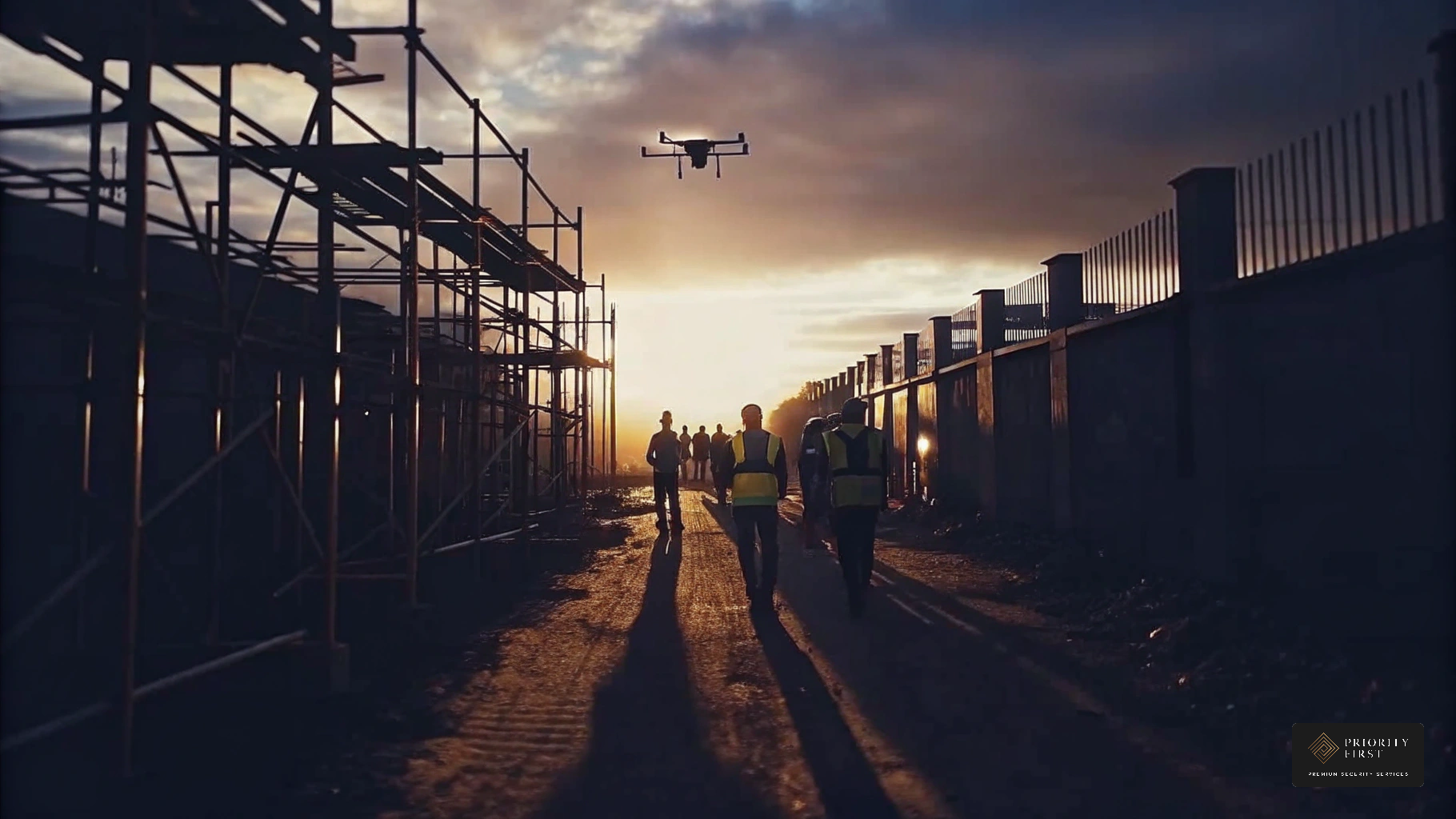
Drones offer significant advantages for aerial surveillance, especially in extensive or hard-to-reach locations. They can provide real-time footage and assist in assessing breaches from above, giving a comprehensive view of the site that ground-based personnel may overlook.
By adopting these technologies, construction locations can significantly enhance their private protection measures, minimise theft, and create a safer working environment. The integration of advanced surveillance systems not only boosts operational efficiency but also ensures compliance with safety protocols, ultimately contributing to the successful completion of projects.
Establish Clear Communication Protocols
Effective communication is crucial for maintaining safety at construction sites. Clear communication protocols can significantly mitigate risks. Consider these essential practices:
- Define Roles and Responsibilities: Clearly delineate the functions of safeguarding staff, site managers, and workers during incidents. Everyone must know whom to contact and the specific actions required of them.
- Regular Briefings: Conduct frequent threat briefings to keep all staff informed about potential dangers, existing protective measures, and emergency procedures. This proactive approach prepares everyone for swift action when necessary.
- Emergency Contact Lists: Develop and distribute emergency contact lists that include key personnel, local law enforcement, and emergency services. These lists should be easily accessible to all workers, facilitating quick communication during crises.
- Utilise Technology: Implement communication tools such as walkie-talkies or mobile apps that enable instant communication among team members, especially during emergencies. This technology enhances coordination and response times.
Promoting a culture of open communication can significantly improve incident response at construction sites. By ensuring that all staff are coordinated in their efforts, businesses can uphold safety and efficiently address potential threats.
Train Personnel in Security Awareness and Emergency Response
Training is crucial for effective private protection at construction sites. Research shows that organisations with ongoing training programmes can reduce employee-related incidents by up to 72% within the first year. This statistic underscores the importance of preparing personnel to recognise and respond to security threats.
-
Safety Awareness Training is a foundational step. Implementing programmes that educate workers on identifying suspicious behaviour and understanding reporting protocols is essential. By using real-world scenarios, employees can better retain information and become more vigilant in their roles.
-
Emergency Response Drills are equally important. Regularly simulating incidents like theft or unauthorised access equips individuals to respond swiftly and effectively when real situations arise. The reality is that preparedness can significantly mitigate risks on-site.
-
First Aid and Safety Training further enhances site security. By ensuring workers are trained in first aid and safety protocols, companies not only protect their employees but also foster a culture of safety. This commitment to training creates a more resilient workforce.
-
Continuous Education is vital in keeping personnel informed about new technologies and best practises. Ongoing training sessions cultivate adaptability and vigilance, essential traits in today’s fast-evolving construction landscape.
By investing in these training initiatives, construction firms empower their workforce to actively engage in private protection at the construction site. This proactive approach not only reduces risks but also enhances overall safety. Engaging formats, such as gamification, can further increase participation and effectiveness, making learning both enjoyable and impactful.
Conclusion
Enhancing security at construction sites is not just about compliance; it’s a crucial strategy for protecting assets, ensuring safety, and fostering a productive work environment. The reality is that by implementing comprehensive risk assessments, integrating advanced security technologies, establishing clear communication protocols, and training personnel in security awareness, construction companies can create a robust security framework that addresses the unique challenges of the industry.
Key strategies include:
- Identifying hazards and vulnerabilities through thorough assessments
- Integrating cutting-edge technologies like CCTV and AI-powered monitoring
- Establishing effective communication channels among all stakeholders
In practise, ongoing training initiatives empower workers to recognise threats and respond appropriately, significantly reducing the likelihood of incidents.
The lesson is clear: the significance of these practises cannot be overstated. As the construction industry continues to evolve, embracing innovative security measures and fostering a culture of safety will be paramount. Companies are encouraged to take proactive steps in enhancing their site security, ensuring that they not only protect their investments but also create a safer working environment for all involved. Prioritising these strategies today will lead to a more secure and resilient construction landscape in the future.
Frequently Asked Questions
Why is it important to conduct comprehensive risk assessments in construction?
Conducting comprehensive risk assessments is essential to enhance protection in construction areas by identifying potential risks, assessing vulnerabilities, and ensuring adherence to safety regulations.
What are the key steps involved in a thorough risk assessment?
The key steps include identifying hazards, assessing vulnerabilities, engaging stakeholders, and documenting findings.
How can hazards be identified during a risk assessment?
Hazards can be identified through a comprehensive site assessment that pinpoints risks such as theft, vandalism, and safety regulation compliance, often utilising checklists and templates for thorough evaluation.
What factors should be considered when assessing vulnerabilities?
Factors to consider include the site layout, access points, and the value of materials and equipment on-site, as well as the effectiveness of existing security measures.
What role do access control systems play in risk management?
Access control systems are critical in managing the movement of individuals and vehicles, ensuring that only authorised personnel can access sensitive areas, thereby reducing the risk of unauthorised entry and theft.
Why is engaging stakeholders important in the risk assessment process?
Engaging stakeholders such as project managers, safety personnel, and workers allows for a diverse range of insights into potential hazards, enhancing the overall effectiveness of the evaluation.
What should be included in the documentation of risk assessment findings?
The documentation should include identified risks, their potential impacts, and recommended mitigation strategies, serving as a reference for ongoing safety planning and necessary adjustments.
How often should risk assessments be conducted?
Risk assessments should be conducted regularly, particularly before major project phases, to proactively address safety concerns and adjust strategies effectively.
How can Priority First contribute to the risk assessment process?
Priority First offers tailored private protection solutions and can initiate a complimentary evaluation to help construction companies bolster their defensive posture and safeguard their assets.